Bound for Scrap
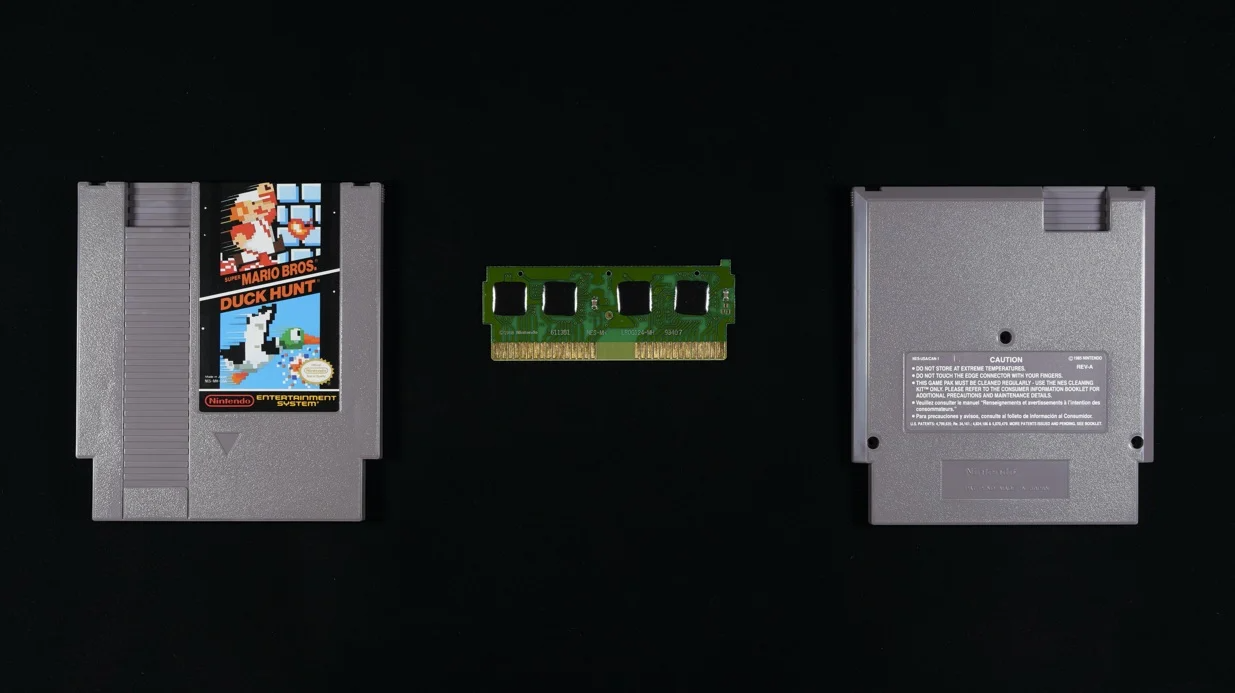
In 1993, two years after Nintendo said the game was finished, a factory ran it again — a hundred copies, headed straight for a smelter. Ninety-seven never got there.
In late 1993, two years after Nintendo had already declared the Super Mario Bros./Duck Hunt cartridge a finished chapter, a factory in Japan ran it again — a hundred copies, date-coded to the last week of August or first of September that year, packed in a box addressed to Nintendo of America. Nobody outside Nintendo has ever explained why. Nintendo still hasn't.
By December 1995 the box had been routed to a precious-metal recovery outfit in Wisconsin, the kind of business that strips gold off old circuit boards once the electronics inside them are worth more dead than working. That was the whole point of the shipment: melt it down. The company's owner had a standing contract with Nintendo to do exactly that to old inventory. Instead, he kept the box. It passed down to his grandson, who walked it into a Waukesha retro game shop a few years back assuming it was worth next to nothing — the shop's own first guess was $10 to $15 a cartridge.
Then Jason Ganos, who runs Nintendo Wire and has spent twenty years combing flea markets and estate sales for Nintendo artifacts, opened the box. "It's like pulling out a Holy Grail," he said. "They're gorgeous." Ninety-seven individually bagged, brand-new copies of what collectors considered the most exhaustively catalogued cartridge in NES history — and every one of them wrong. Different screws. A motherboard revision nobody had recorded. A back sticker printed in languages the real 1988 release never used. The detail that got two separate grading companies messaging Ganos within minutes of seeing photos: on the manual's back page, where every known copy reads "maintenance or repairs," these say "maintenance or service." One word, never documented before, on a game everyone assumed had nothing left to discover.
Five of the ninety-seven have since graded a perfect 10 — the first time any NES cartridge has scored one at Professional Sports Authenticator, ever. Three went up for bidding this month through Goldin Auctions. The leading theories for why Nintendo ran the line again two years after killing it: warranty replacements, or a retail bundle that got planned and then quietly cancelled. Three of the original hundred are still unaccounted for, wherever cartridges end up instead of the smelter.