Fifty-Three Septembers Later
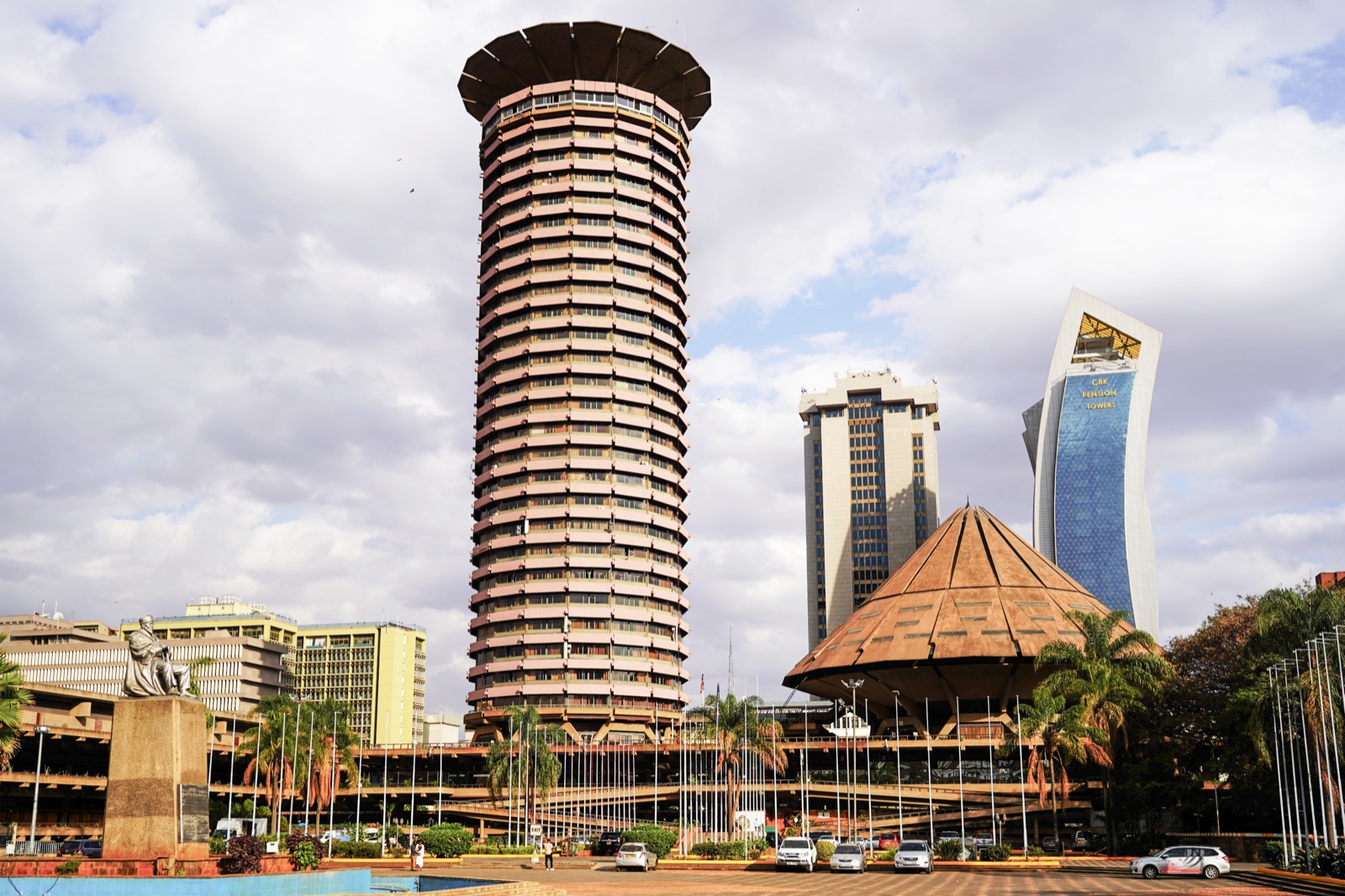
The room Nairobi's newest Pan-African architecture biennale just opened in was designed by a Norwegian, launched by hosting the World Bank, and — per the Kenyan architect who co-signed it — shaped like a donkey's penis.
Kenya's most photographed building was commissioned in December 1967, when Jomo Kenyatta laid its foundation stone a decade after independence. KICC's own website credits the design to Norwegian architect Karl Henrik Nøstvik and Kenyan architect David Mutiso together — though a 2018 Africa Check investigation found the surviving blueprints carry only Nøstvik's name. Whatever the real split, the building that opened on September 11, 1973 gave Nairobi its first true landmark: a cylindrical tower flared into a saucer-shaped crown, next to a squat, cone-roofed amphitheater, both read by most people as deliberately African forms.
Mutiso told a different story. In an October 2018 Citizen TV interview, he said the tower's actual inspiration was a donkey's erect penis. It made Kenyan Twitter's week, and — blueprint credit aside — it's the origin story everyone still repeats over the official one.
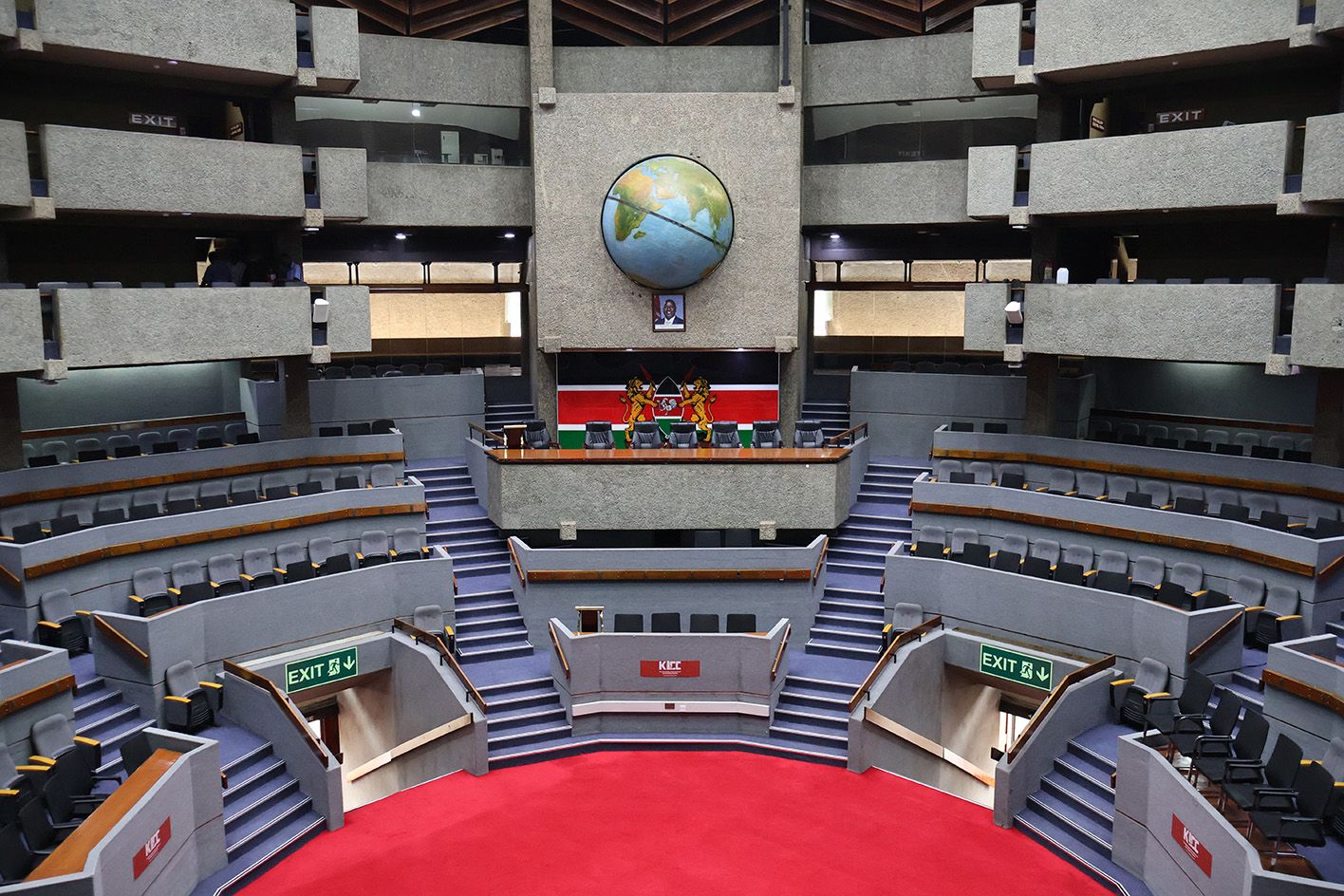
Thirteen days after the ribbon-cutting, that same plenary hall hosted its first international guests: the 1973 Annual Meetings of the World Bank and IMF Boards of Governors — the first time that meeting had ever left Washington, the first time it had ever been held in Africa. On September 24, World Bank president Robert McNamara stood at that podium and told the assembled governors that 800 million people were living in "absolute poverty," that the development aid on the table wasn't close to enough, and laid out his own prescription for what the Global South should do about it. Argentina, in and out of the Fund's waiting room for most of the fifty-three years since, doesn't need the footnote explained.
This week, same podium, same red carpet, same globe mounted over the stage: the building — renamed the Kenyatta International Convention Centre in 2013 — is hosting the opening week (September 7–11) of the first-ever Pan-African Biennale of Architecture, curated by Somali-Italian architect Omar Degan under the theme "Shifting the Center: From Fragility to Resilience." Degan didn't pick the venue by accident. "It has powerful symbolism," he told OkayAfrica ahead of the opening. "It was part of the Pan-African movement" — hosting there now, he said, shows Kenya "gets to host something that shows we have moved beyond" the colonial framing the biennale exists to argue against.
"How are we still letting the West define us?" Degan asked in the same interview. "Why should a European event be the one telling African stories?" Fifty-three years after McNamara's, from the same podium, it's still a fair question.