The Man Who Wrote Its Obituary
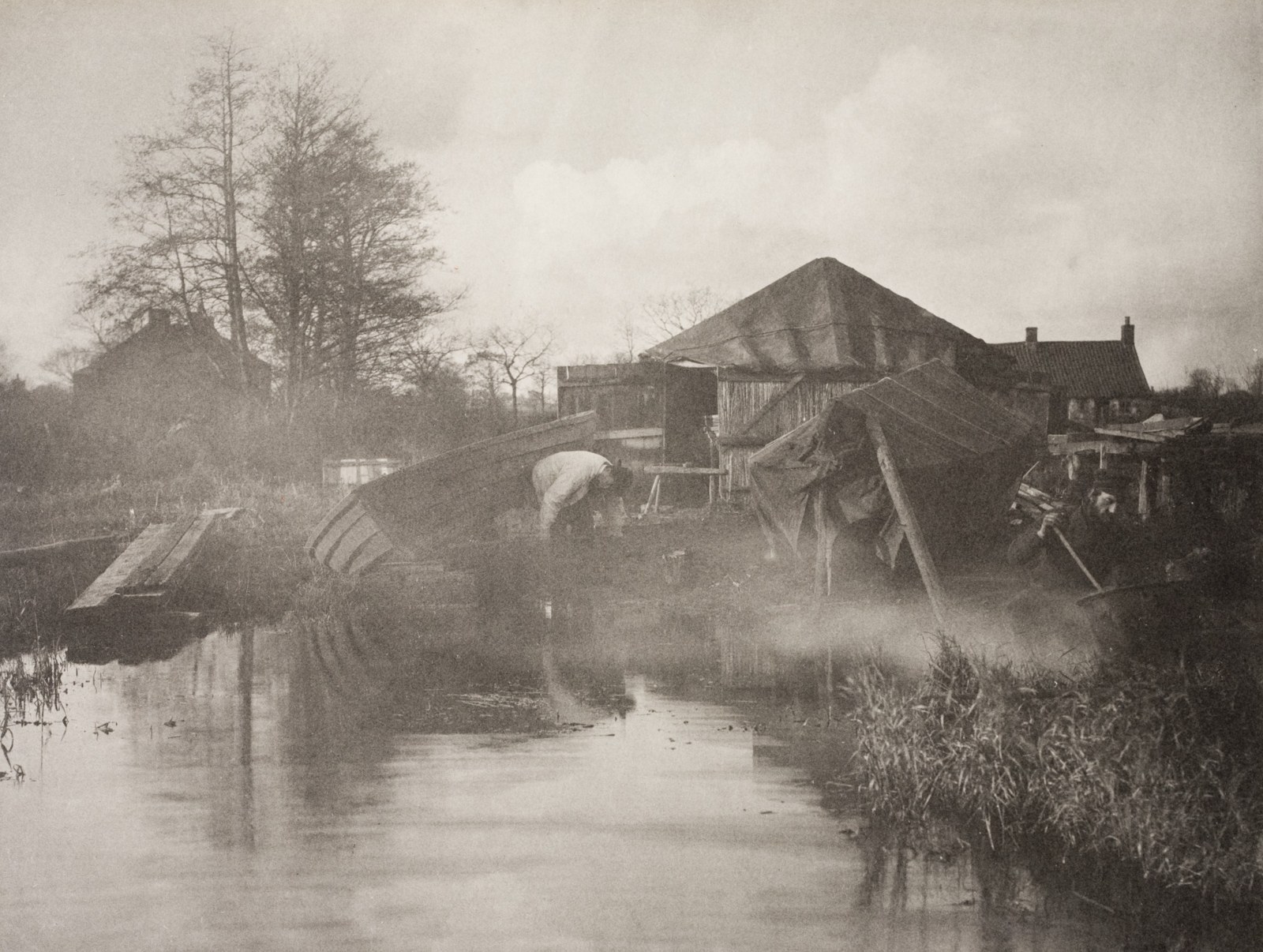
Tate Modern is calling its new show the birth of art photography. One of the photographers in it spent 1889 arguing photography was a fine art, then mailed out a black-bordered pamphlet announcing its death.
Tate Modern opened Light & Magic: The Birth of Art Photography on Wednesday: about 200 prints by more than 80 photographers, which Tate bills as the first major show to treat Pictorialism as a global movement. It runs through February 21. Hung in the first chapter, per the press release, is Peter Henry Emerson's A Norfolk Boat-Yard (1886).
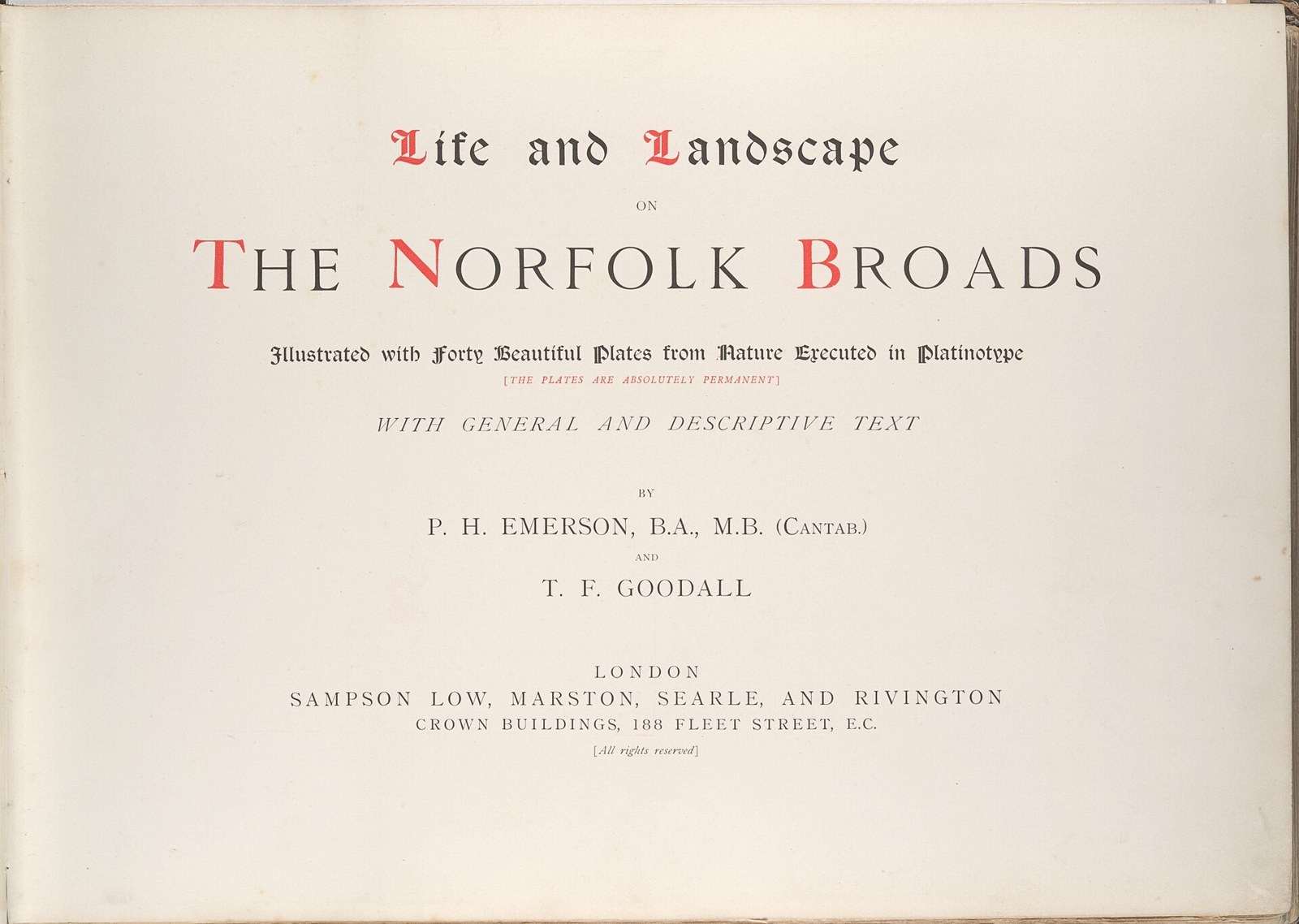
Emerson was a doctor who gave up medicine and spent his summers on the Norfolk Broads with a camera, a boat and a conviction. His 1886 book, Life and Landscape on the Norfolk Broads, promised on its title page “forty beautiful plates from nature,” and in March 1889 he followed it with Naturalistic Photography for Students of the Art, which asked that pictures show a scene “as seen by the normal human eye.” The argument underneath was that a photograph could be a fine art, and he argued it hard enough that he got a following.
Then on May 31, 1890, Ferdinand Hurter and Vero Driffield published a paper showing that the tones in a negative are fixed by the exposure, so a photographer can't reshape them in development the way Emerson had been telling students they could. By the end of the year he had written a pamphlet called The Death of Naturalistic Photography. It is dated December 1890, the first notices ran on January 22, 1891, and it was printed with a thick black border, modelled on a death notice. In it he took back his teaching, withdrew his own book, and concluded that photography was a very limited art. He mailed copies to the main photography journals in Britain and America.
He barely photographed again after the Broads trip of 1891. So the opening chapter of the “birth” of art photography is built on a man who spent the 1890s announcing its death, and the prints he left behind are the best argument against him. A hundred and thirty years later, a museum on the Thames charges £20 to go and look at them.
The rest of the show runs from Fan Ho's Smoky World (1959) to Steichen's Primo Carnera and Paul Strand's Miss Thomson, New Mexico. None of it has a black border, which is a shame.