Too Well Made for the Future
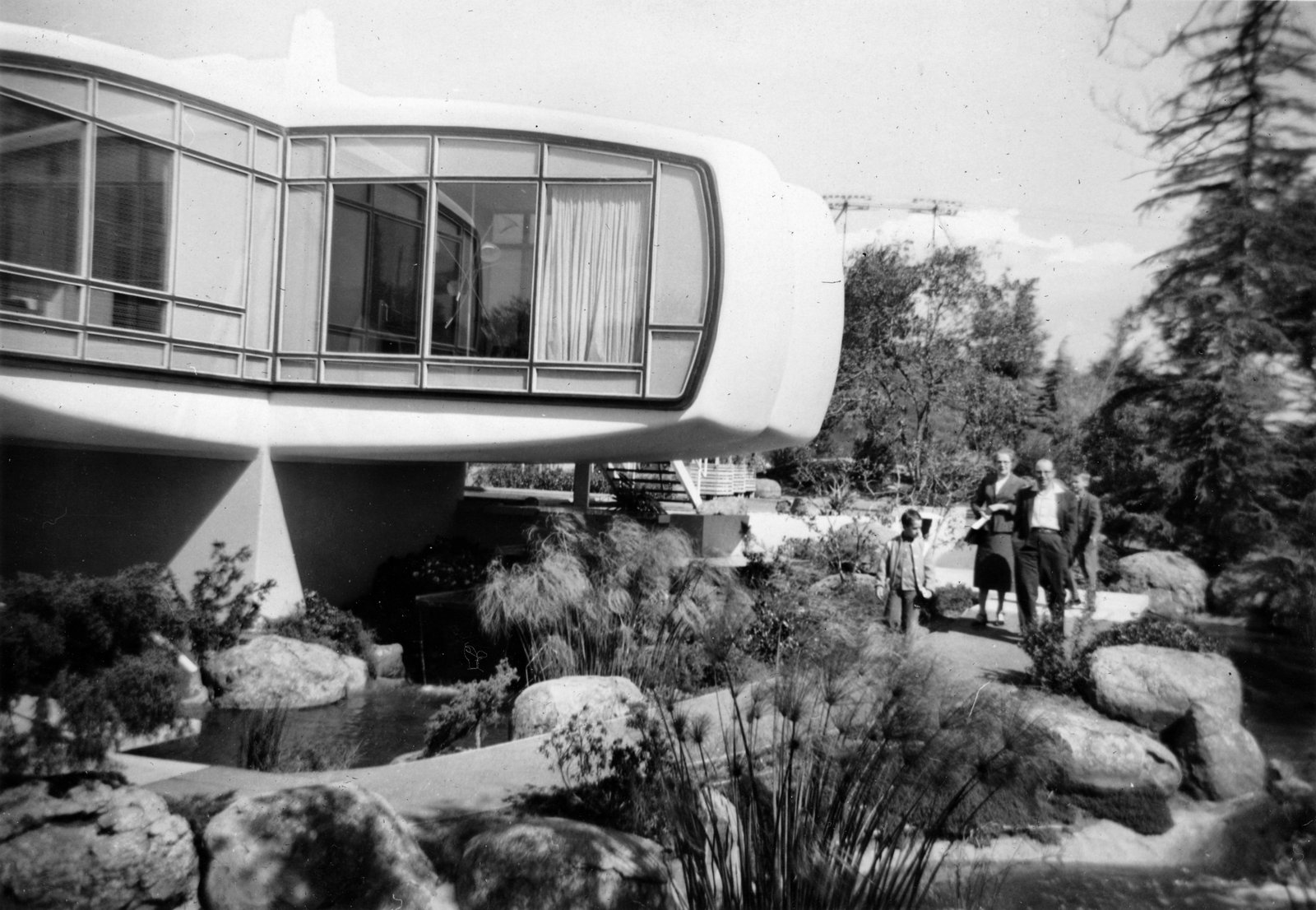
LACMA's Home of the Future show includes Disneyland's 1957 plastic House of the Future. It went out of date in ten years, and it took choker chains to knock it down.
LACMA's Home of the Future, 1925–1985: Designing Domestic Utopias is on in the Resnick Pavilion through March 14: sinks, television sets, models, drawings, films, and the question of who got left out of all those futures. One of the loans, from the MIT Museum, is a 1956 presentation rendering by Hamilton & Goody for the Monsanto House of the Future.
The house itself opened in Disneyland's Tomorrowland on June 12, 1957. MIT architecture faculty Marvin Goody and Richard Hamilton designed it with Monsanto's plastics engineers. It had four wings cantilevered off a central core, all in glass-reinforced plastic, and it was built to prove that plastic was a serious material for houses. More than 435,000 people walked through it in its first six weeks, and over 20 million before it closed.
It closed in December 1967, once the future it showed had stopped looking like the future. Then Disneyland tried to take it down. Wrecking balls, torches, chainsaws and jackhammers didn't do it. In the end, per its history, crews crushed it into pieces with choker chains, and the half-inch steel bolts holding it to the foundation snapped before the shell did. The pitch was that plastic would last, and the house outlasted the pitch.
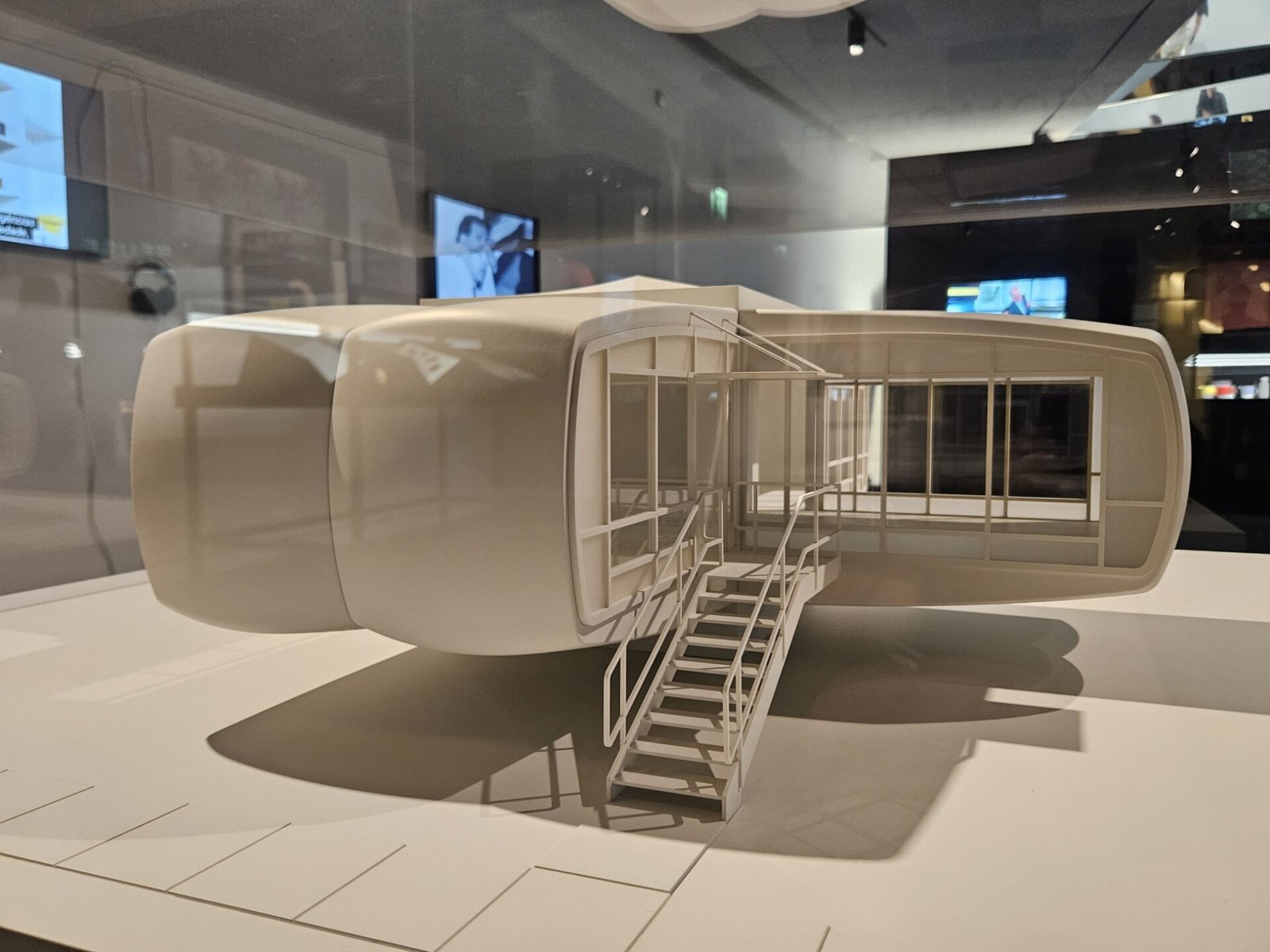
The foundation was never removed. It's still in the park, in Pixie Hollow, painted green and used as a planter. The company name didn't last that long: Bayer bought Monsanto in 2018 and retired it.