Too Coarse for Letters
The first ballpoint pen was patented 138 years ago today by a bank cashier, and it couldn't write a letter. The one that could became an Argentine word.
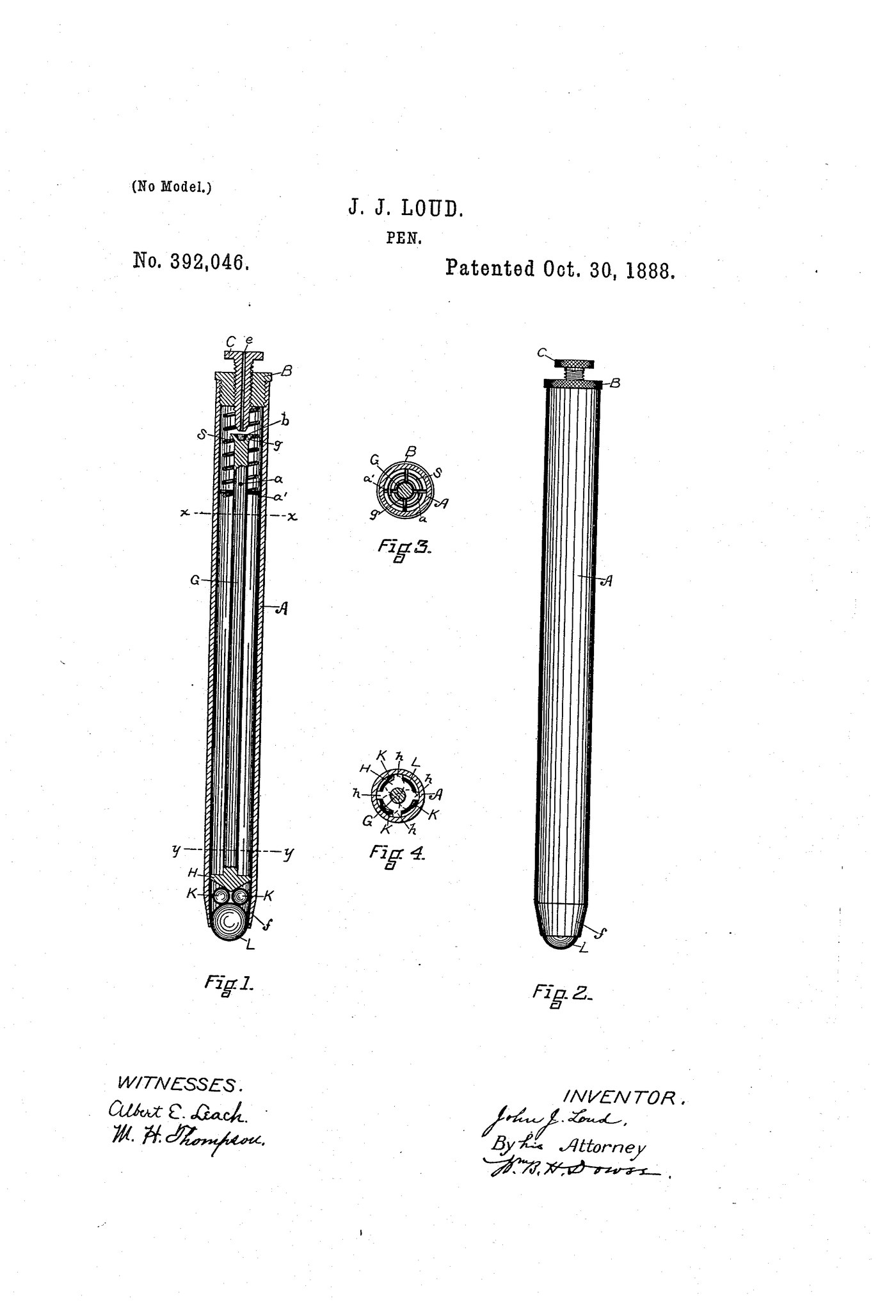
The ballpoint pen was patented 138 years ago today, and the man who patented it wasn't trying to write letters. John J. Loud was a Harvard-trained lawyer working as the cashier of the Union National Bank in Weymouth, Massachusetts. US Patent 392,046, granted October 30, 1888, describes a pen with a small steel ball turning in a socket, "especially useful... for marking on rough surfaces such as wood, coarse wrapping paper, and other articles where an ordinary pen could not be used." It was fine on a crate. On a letter it was too coarse. Nobody manufactured it and the patent lapsed (Wikipedia). The same year he patented a firecracker cannon.
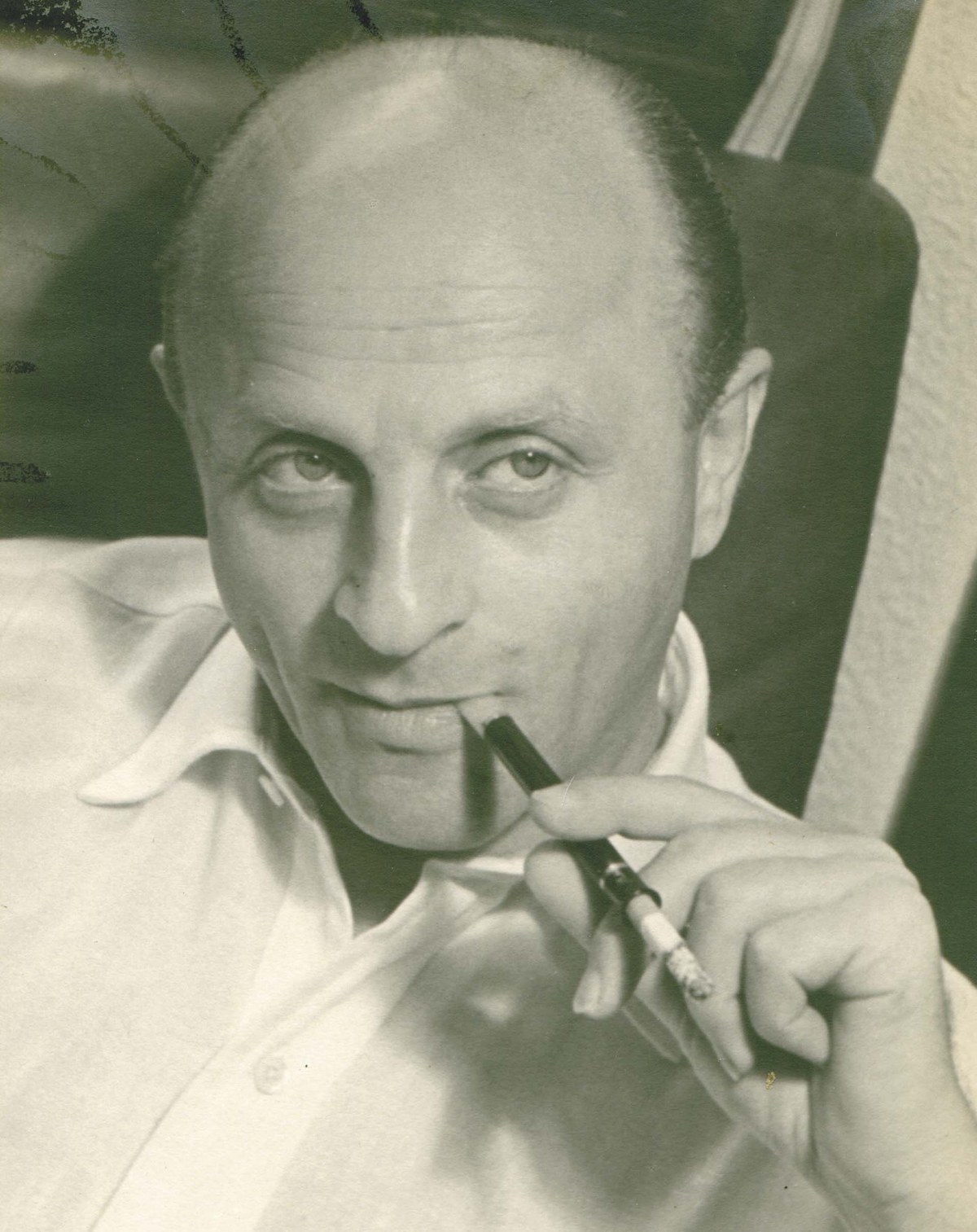
The one that worked came out of a newsroom. László Bíró, a journalist in Budapest, noticed that newspaper ink dried almost instantly and didn't smudge, and that it was far too thick to go through a fountain pen. With his brother György he built a tip around a ball that picked up the thick ink and rolled it onto the page, and filed a British patent in June 1938. The family were Hungarian Jews, born Schweiger. By the early 1940s the brothers and a friend, Juan Jorge Meyne, were in Buenos Aires running Biro Pens of Argentina.
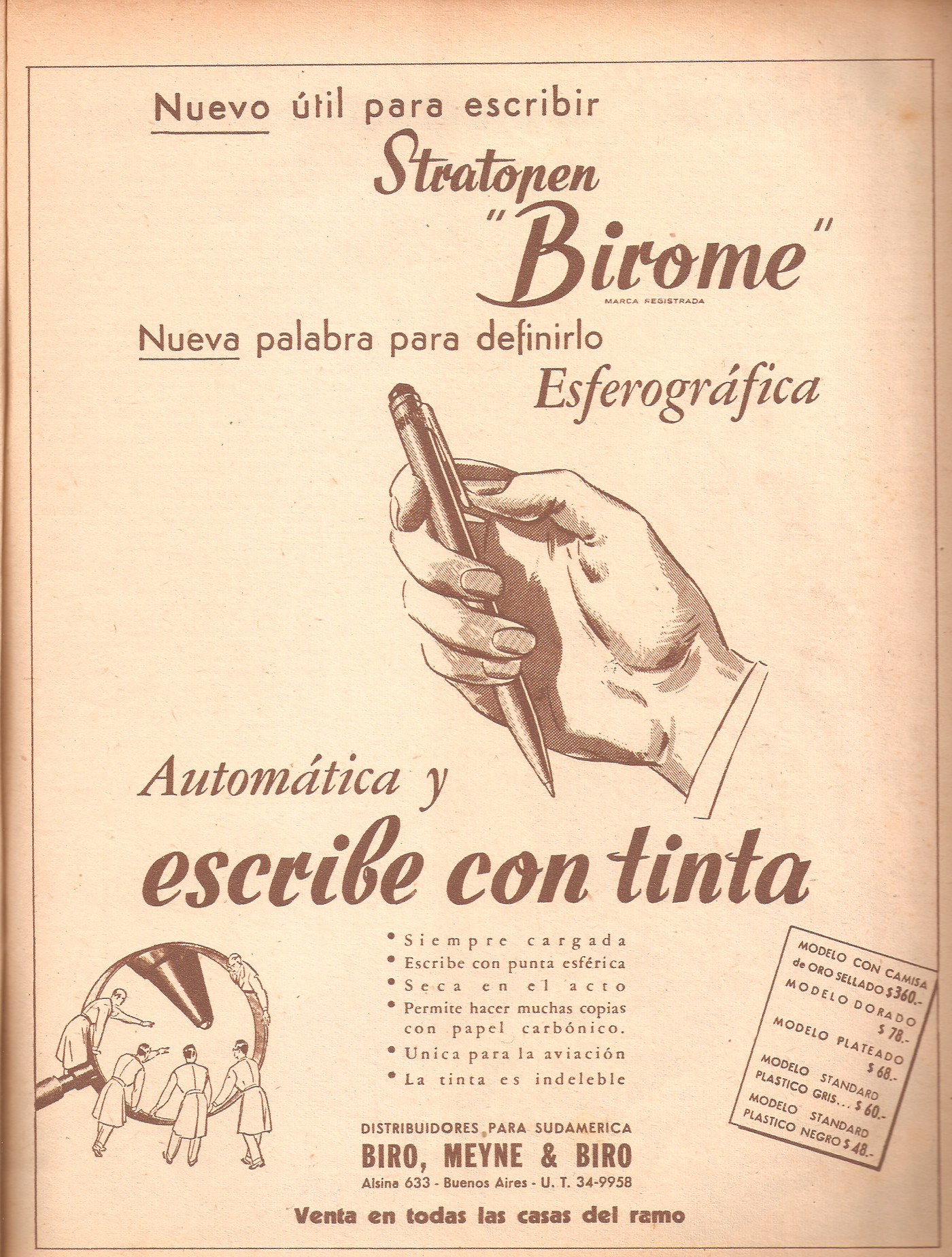
Look at what their 1945 ad (top) is trying to do. Nuevo útil para escribir, a new tool for writing, the Stratopen "Birome", and then: Nueva palabra para definirlo: Esferográfica. A new word to define it. Portugal ended up using it. Argentina didn't. Birome, Bíró plus Meyne, was the brand, and the brand became the word: in Argentina and Uruguay a ballpoint is still a birome. The ad also calls it única para la aviación; the British licensed it for RAF aircrew, the story goes, because fountain pens leaked at altitude.
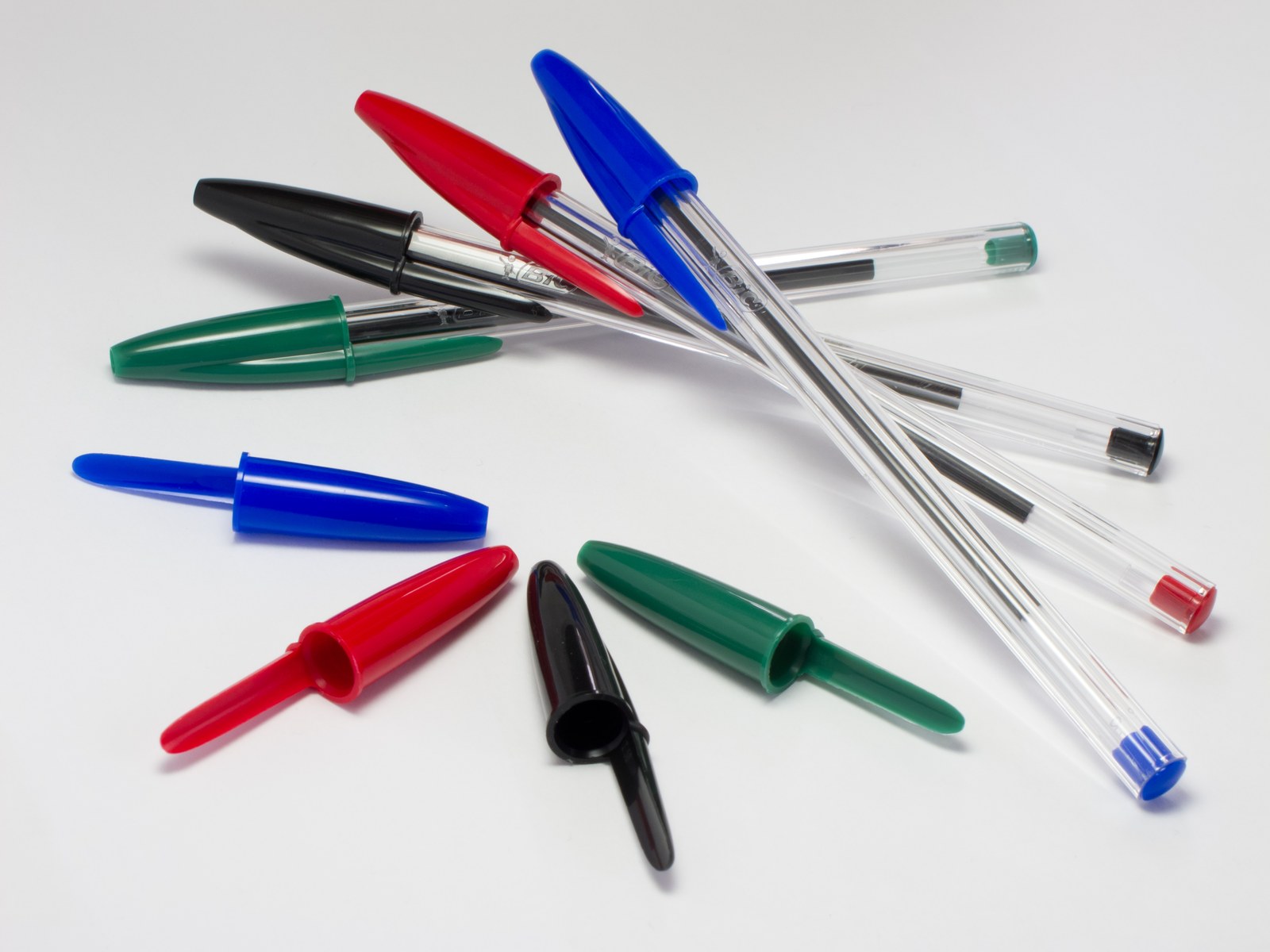
Then other people got rich off it. Milton Reynolds, an American businessman, picked up some Biromes on a trip to Buenos Aires, changed the design just enough to get his own patent, and put the "Reynolds Rocket" on sale at Gimbels in New York on October 29, 1945, 81 years ago yesterday, for $12.50 (around $224 now). Gimbels sold thousands in a week. By the early 1950s the boom was over and Reynolds' company had folded. In France, Marcel Bich licensed Bíró's patent, launched the Bic Cristal in December 1950, and on an ad man's advice took the h off his name. The hundred-billionth Cristal sold in 2006, and MoMA keeps one in its permanent collection (Wikipedia).
Bíró died in Buenos Aires on October 24, 1985. Argentina celebrates Inventors' Day on his birthday, September 29, and in Britain, Ireland, Italy and Australia a ballpoint is a biro. His name became a common noun on three continents. The fortune went to a man who took a letter off his.
For a while the new pens had a reputation for smudging and fading, so Paper Mate came up with a new ink and advertised it as "banker-approved." The first man to patent a ballpoint was a bank cashier.