The Brilliant Project

Thirty-eight years ago tomorrow, a Cornell grad student crashed the internet by accident. He got probation, then tenure at MIT, then co-founded the firm that funded Reddit.
At 8:30 p.m. on November 2, 1988, 38 years ago tomorrow, a program went out onto the internet from a computer at MIT. It was written by Robert Tappan Morris, a 23-year-old first-year PhD student at Cornell, who launched it from MIT so it wouldn't trace back to Cornell. A friend said he wrote it just to see if it could be done: a program that crawled from machine to machine through a hole in sendmail, a bug in finger and everybody's lazy passwords, quietly.
The quiet part didn't work. Morris worried admins would fake an "already infected" answer to keep it out, so he told the worm to copy itself anyway one time in seven. Machines got infected again and again until they froze. Clifford Stoll counted two thousand dead computers in fifteen hours, and regional networks unplugged themselves from the backbone for days to clean up. Michael Rabin, whose ideas about randomness inspired the one-in-seven rule, said later that Morris "should have tried it on a simulator first" (Wikipedia).
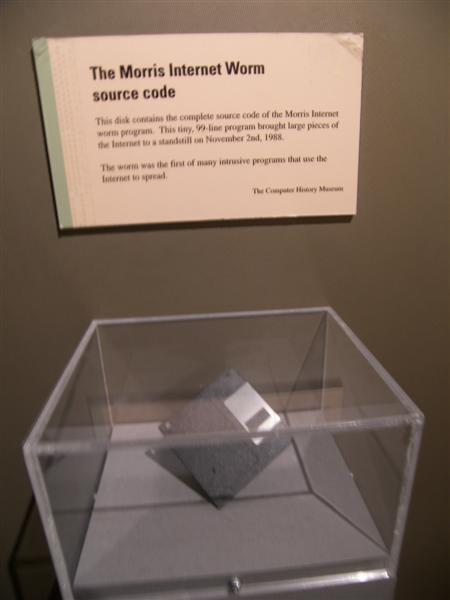
Then the papers found out who his father was. Robert Morris senior had helped build Unix at Bell Labs and was now chief scientist at the NSA's National Computer Security Center. He talked to the New York Times with NSA officials and lawyers listening in, and called it "the work of a bored graduate student." The son became the first person convicted of a felony under the 1986 Computer Fraud and Abuse Act: three years' probation, 400 hours of community service, a $10,050 fine.
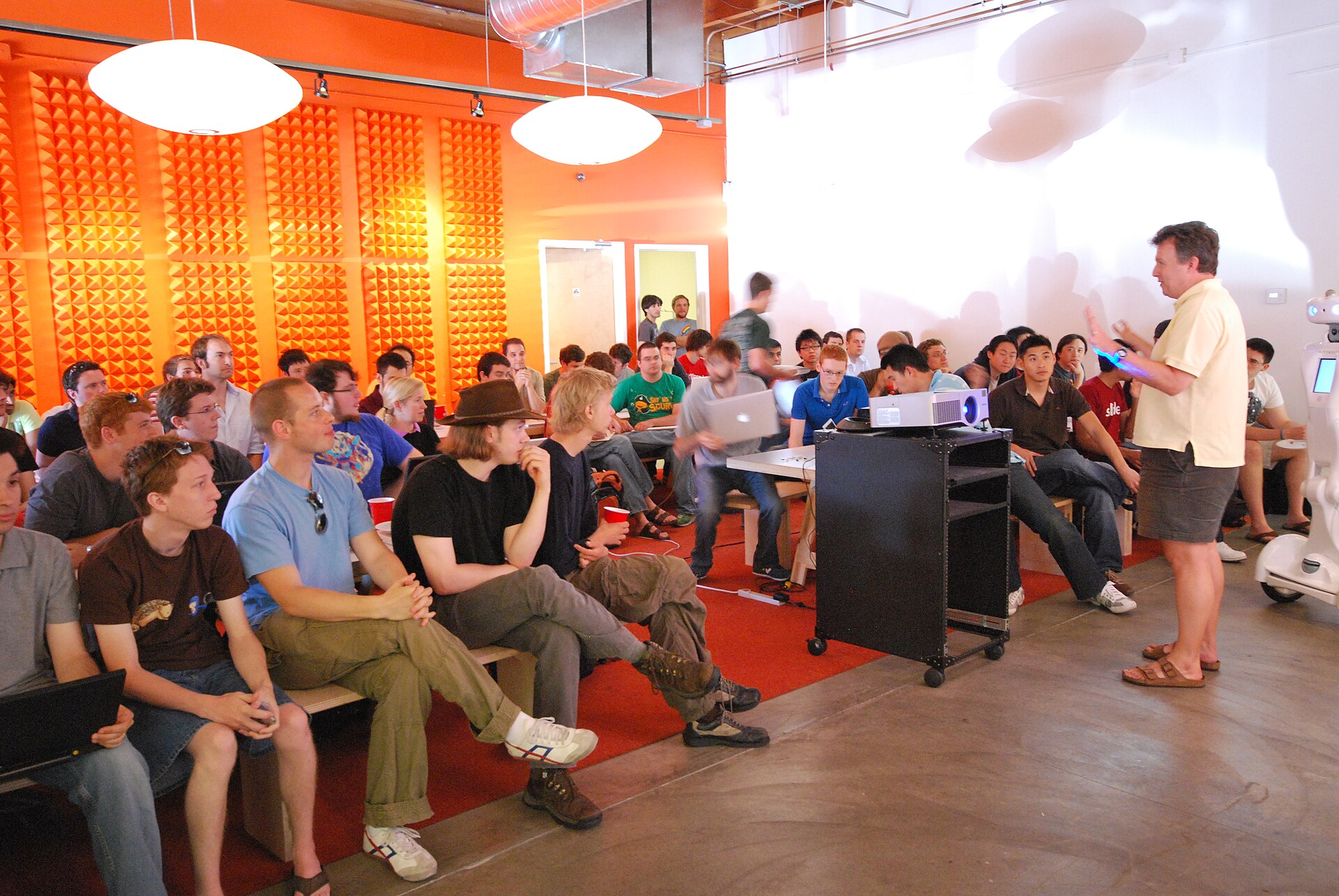
The rest of the CV reads like a different man's. In 1995 he started Viaweb with his friend Paul Graham, software for building web shops; Yahoo bought it for $49 million and Graham named its page language RTML, for Robert T. Morris. Harvard gave him a PhD in 1999, and the same year MIT hired him, the school he'd borrowed so nobody would look at Cornell. Tenure came in 2006. In 2005 he, Graham, Jessica Livingston and Trevor Blackwell (who took the photo up top) started Y Combinator. The first batch that summer included two University of Virginia graduates with a site called Reddit.
Also in that batch was Aaron Swartz, who merged his company into Reddit months later. In 2011 he was charged under the same 1986 law, for downloading academic papers over MIT's network, and faced up to 35 years. He died in 2013, before trial.
Graham, by the way, was in on the worm from the start. Stoll wrote that Graham had emailed Morris asking for "any news on the brilliant project." And the number everybody still quotes, 6,000 infected computers, Graham says he watched being made: someone guessed the internet had about 60,000 machines and the worm got ten percent. Nobody actually knew, because the fix was to reboot, which wiped the traces. In a 2005 essay he wrote that the figure "is now replicated all over the Internet, like a little worm of its own."