Something Like Five Million Copies
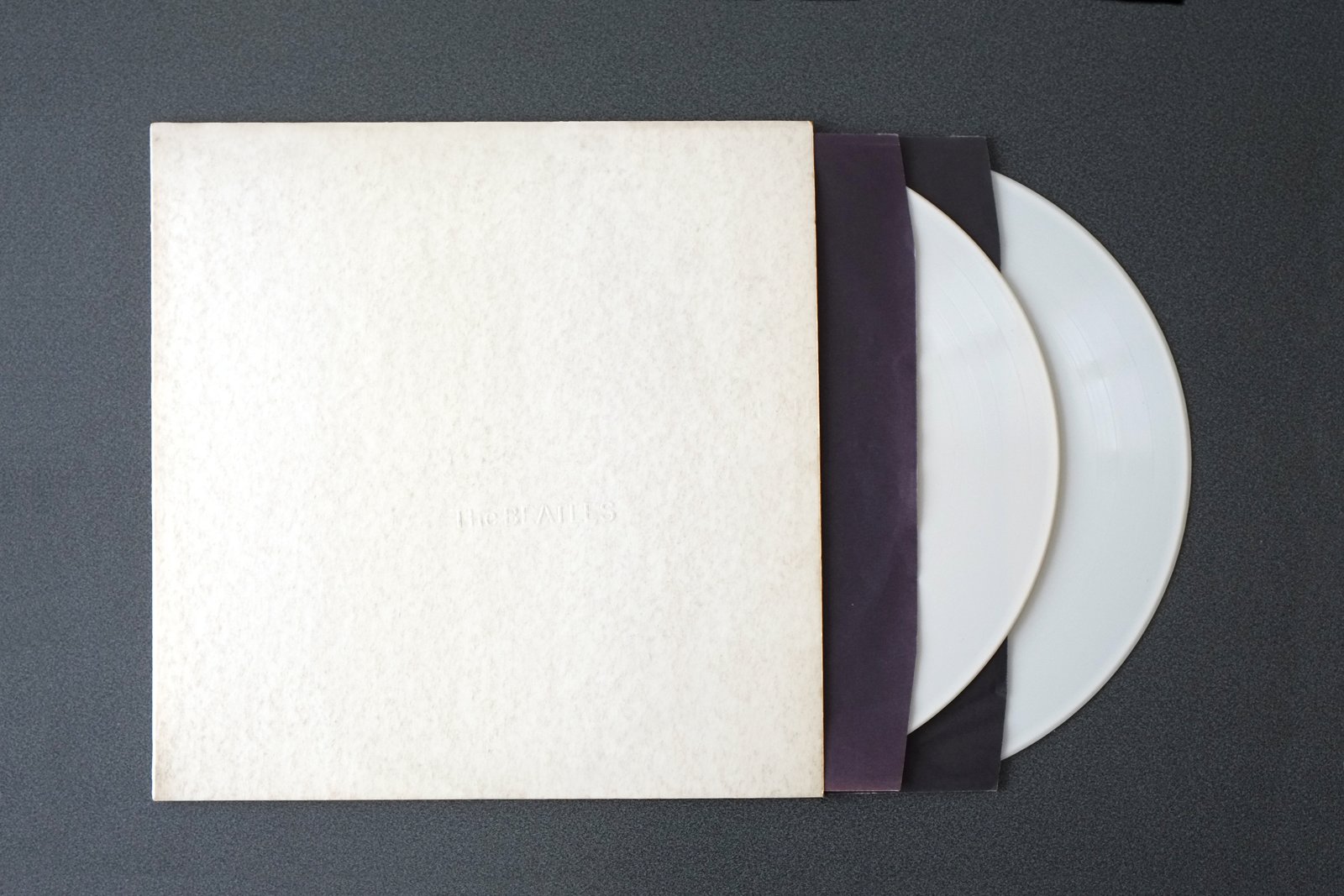
The White Album came out 58 years ago today. Its designer numbered every early copy as a joke about limited editions. Copy No. 0000001 later set a world record.
The Beatles' double album came out in Britain 58 years ago today, on November 22, 1968, in a sleeve with almost nothing on it. Richard Hamilton, the pop artist brought in through the band's art-dealer friend Robert Fraser, had told Paul McCartney that "it might be nice to have a completely clean sheet and just do a white cover." The title was blind-embossed, which Hamilton said he "wouldn't have done." Then he added the touch that turned a blank sleeve into a gag. Every early copy got its own serial number, the first two million machine-stamped. The idea, as he told it, was "to create the ironic situation of a numbered edition of something like 5 million copies."
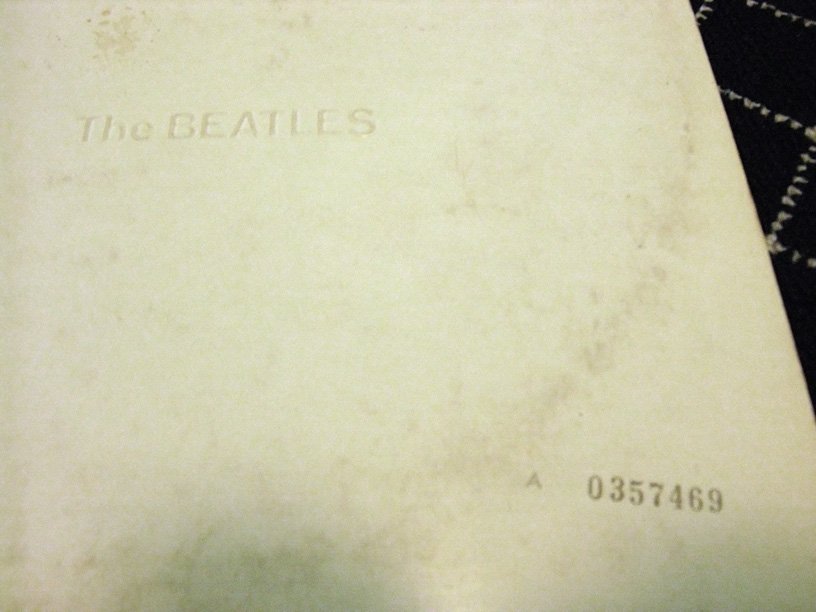

A numbered edition is how the art world tells you something is scarce: fifty prints, signed, each one counted. Hamilton had been making pop art out of advertising since the fifties, and he put the same mark on a record EMI was pressing by the million. A limited edition, for everybody.

The joke had one weak spot. If every copy has a number, one copy is number one. Collectors had long assumed the band kept the first four, but nobody knew who held 0000001 until Ringo Starr put it up for auction. He had kept it in a London bank vault for more than 35 years. On December 5, 2015, at Julien's in Los Angeles, it sold for $650,000, or $790,000 with the buyer's premium. Guinness lists it as the most expensive vinyl record ever sold at auction. The previous record, an Elvis Presley acetate, had gone for $305,000. The lowest-numbered copy to come up before it, No. 0000005, had sold in 2008 for close to $30,000.

It wasn't a sealed copy, either. "We used to play the vinyl in those days," Ringo said before the sale. "Whoever gets it, it will have my fingerprints on it."