A Futile Effort
D.B. Cooper jumped out the back of a 727 55 years ago tonight, down stairs most crews didn't know could open in flight. The fix carries his name.
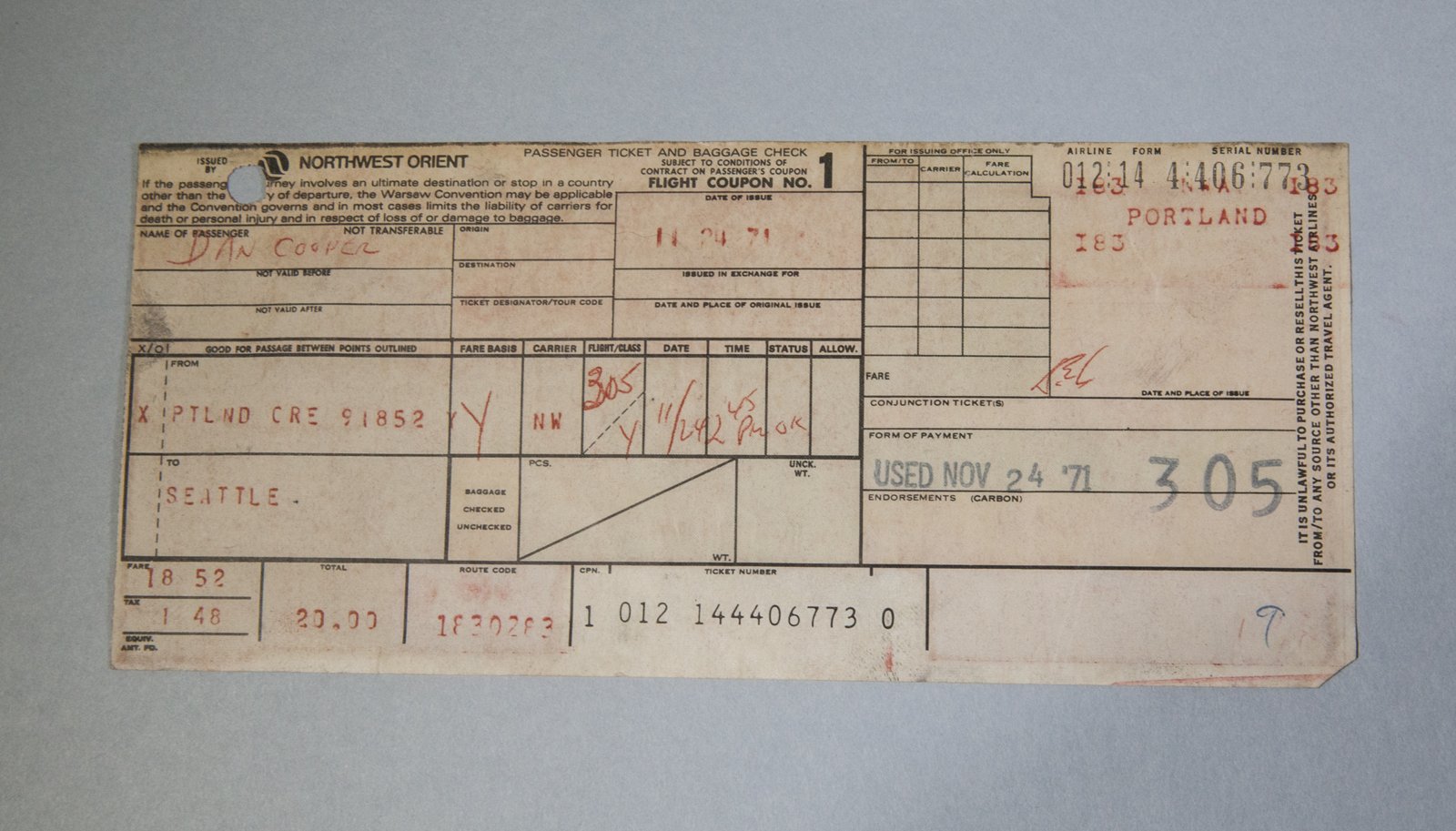
On the afternoon of November 24, 1971, the day before Thanksgiving, a man in a business suit paid cash at the Northwest Orient counter in Portland for a one-way ticket on Flight 305 to Seattle, a thirty-minute hop. The ticket is still in the FBI's files: "DAN COOPER," $18.52 plus $1.48. Twenty dollars even. Soon after takeoff he handed a flight attendant a note. He had a bomb, and he wanted $200,000 in twenty-dollar bills and four parachutes.

He got both in Seattle, let the 36 passengers off, and sent the plane back up toward Mexico City. Somewhere between Seattle and Reno, a little after 8 p.m., he lowered the rear stairs and walked down them into the dark over southwest Washington. He has never been identified. Even the name everyone remembers is wrong: a reporter on deadline wrote "D. B. Cooper," the wires repeated it, and it stuck. The FBI kept the case open for 45 years and suspended it in 2016.
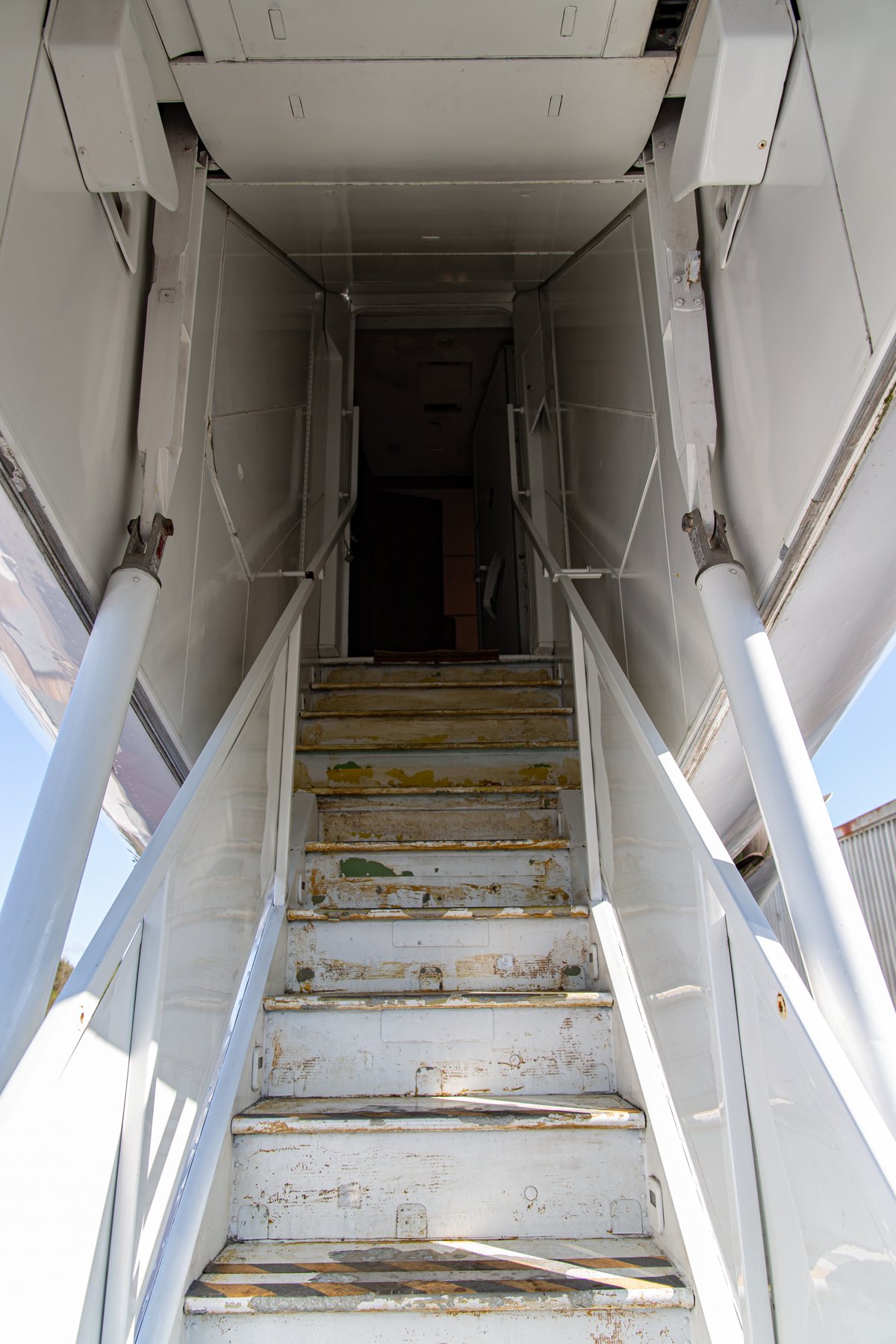
The plane made it possible. The Boeing 727 boarded passengers through a ventral airstair that folds down from under the tail, and on the 727 that stair could be lowered in flight, from a single switch in the rear cabin that the cockpit couldn't override. Airline crews weren't told. No passenger flight would ever need it. The FBI's guess is that Cooper knew because the CIA had been using 727s to drop agents and supplies in Vietnam.

After that, everyone knew. In 1972 fifteen hijackers asked for parachutes along with the money. Richard McCoy jumped from a United 727 over Utah with $500,000 and was arrested two days later. Frederick Hahneman jumped from an Eastern 727 into Honduras.
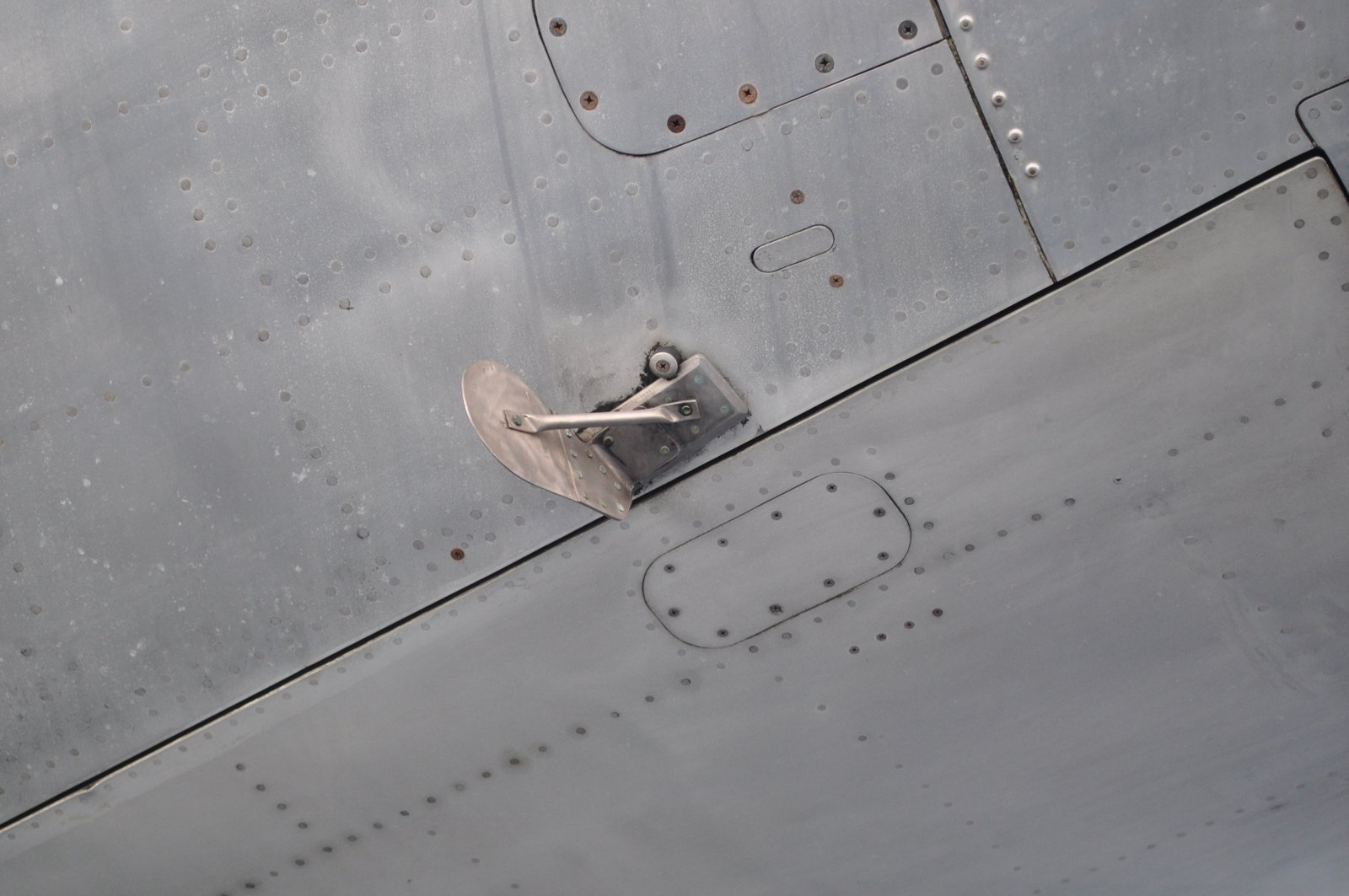
The FAA's answer ran in the Federal Register as "Rear Exit Security." Every belly and tailcone exit on a large passenger jet had to be built so it "cannot be opened during flight," with a placard next to the handle saying so. On the 727 it became a spring-loaded aluminum paddle beside the stair door. On the ground it sits out of the way. At flight speed the airflow swings it into place and the stairs stay shut, and nobody in the cabin can override it. It is known as the Cooper vane.
The rule explains itself in one sentence: "any attempt to hijack a large passenger-carrying turbojet-powered airplane and escape therefrom by parachute will be a futile effort." It was issued in Washington on November 24, 1972. A year to the day.