Well Named Pacific
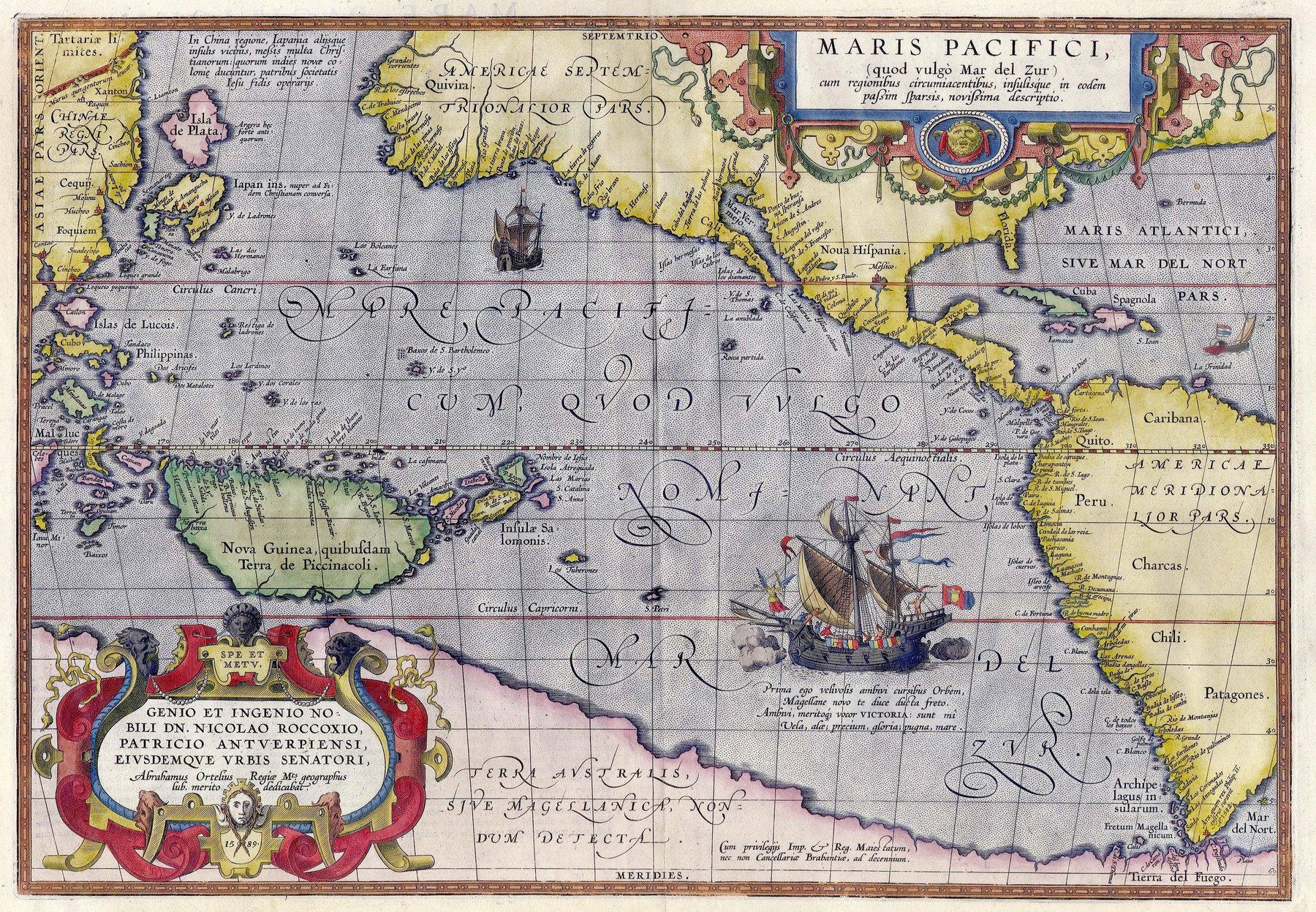
On November 28, 1520, Magellan's ships came out of the strait into an ocean so calm he called it peaceful. They spent the next three months and twenty days in it, eating rats.
Wednesday, November 28, 1520. Three Spanish ships came out of a strait at the bottom of South America into an ocean nobody in Europe had sailed. They had left Seville in September 1519 as five ships and about 270 men. One had wrecked on the Patagonian coast, and another had turned around in the strait and gone home. The water ahead was calm, so Ferdinand Magellan called it the Mar Pacífico, the peaceful sea. He figured the Spice Islands were three or four days away.
It took three months and twenty days. Antonio Pigafetta, a Venetian on board who kept a journal the whole way, wrote down the menu. The biscuit had turned to powder, "full of grubs, and stinking from the dirt which the rats had made on it." The water was yellow. They soaked the ox hides wrapped around the main-yard in the sea for four or five days, grilled them on the embers, and ate those. Then sawdust. Then the rats, which sold on board for half a ducat each, "moreover enough of them were not to be got." They passed within reach of the Marquesas and the Society Islands and never saw them. The only land they found in 98 days was two little uninhabited islands with no place to anchor. They named them the Unfortunate Islands.
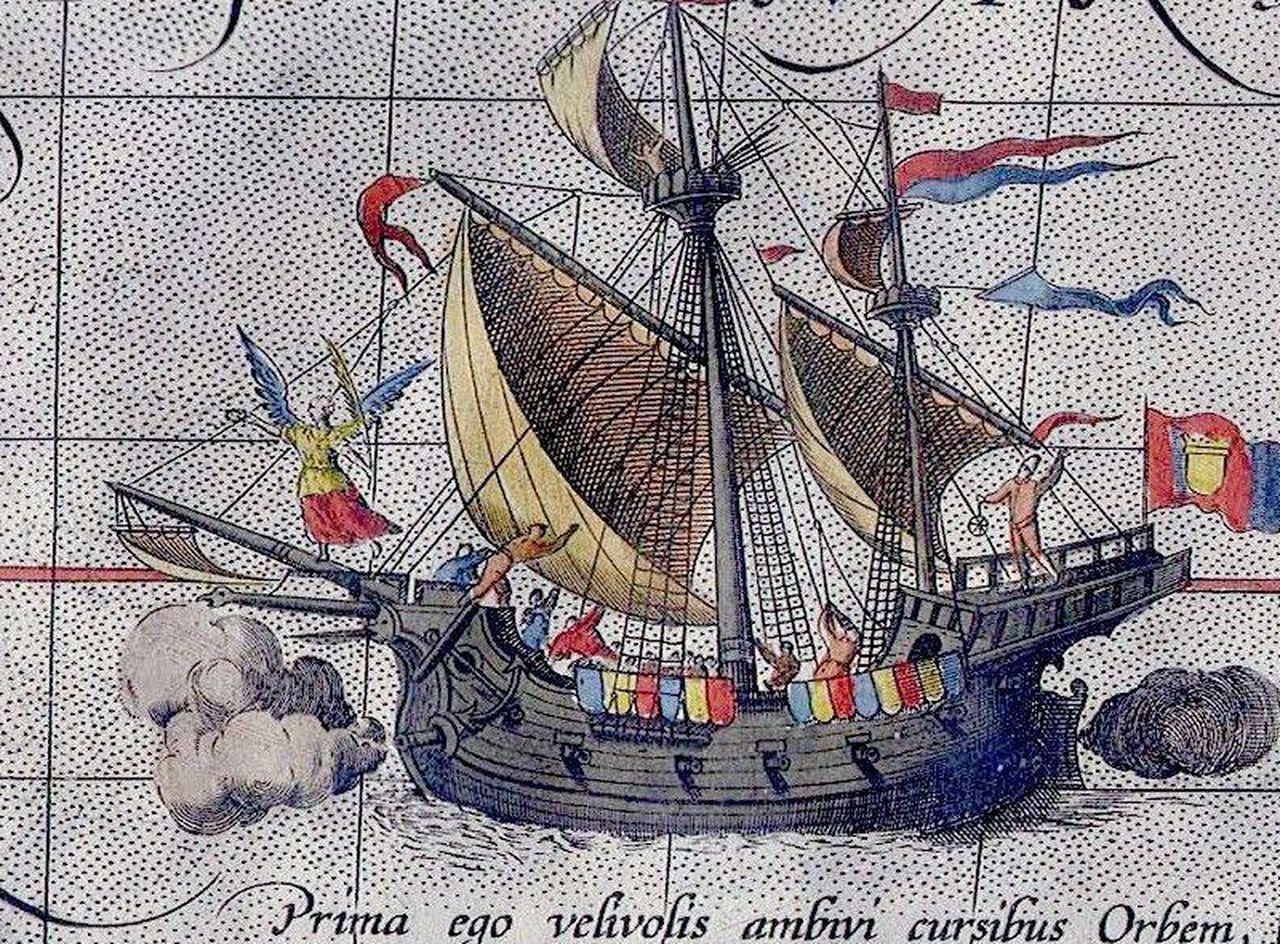
Scurvy did the rest. The men's gums swelled over their teeth until they couldn't eat; of the 166 who started the crossing, Pigafetta counted 19 dead and twenty-five or thirty more sick. "However, thanks be to the Lord," he added, "I had no sickness." Neither did Magellan or the officers, and historians think they know why: the captains' private stores held carne de membrillo, quince paste, which carries the vitamin C nobody aboard knew they needed. The officers got through the Pacific on the stuff that goes on a vigilante. Before the strait, the fleet had spent five months wintering at Puerto San Julián, in what's now Santa Cruz, where Magellan put down a mutiny and named the tall people they met there Pataghoni. The name stuck to the whole region.
Magellan didn't sail around the world, either. He was killed on April 27, 1521, on the beach at Mactan, in the Philippines, fighting Lapu-Lapu's men. Juan Sebastián Elcano, who'd been one of the San Julián mutineers, brought the Victoria into Spain on September 6, 1522, with 18 men left of the 270.
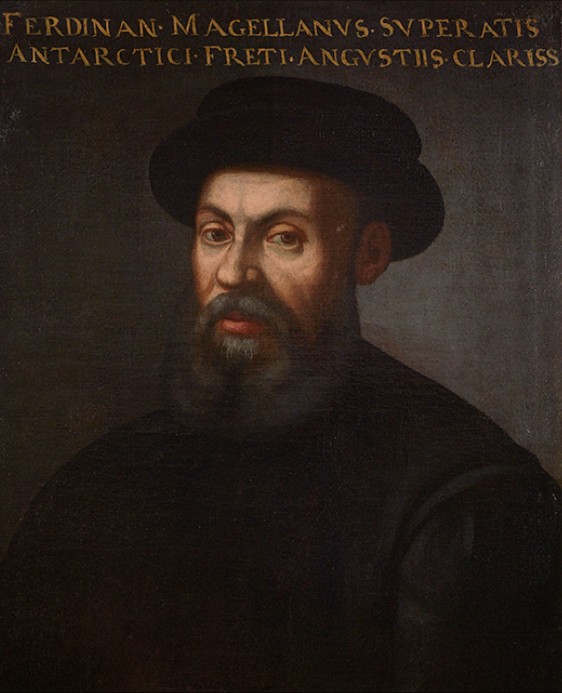
Pigafetta read the 98 days as proof that Magellan had chosen the name well. "This was well named Pacific," he wrote, "for during this same time we met with no storm."