The Original All-Inclusive
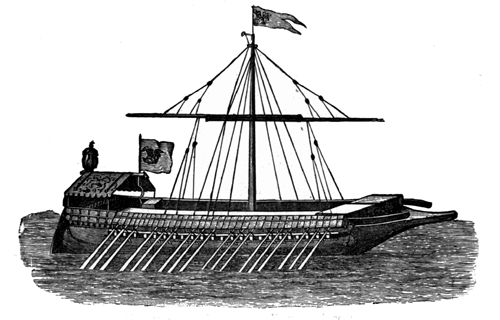
World Tourism Day's 2026 theme is AI redesigning travel. Venice already fixed the price, the itinerary, and the complaints department for pilgrims sailing to Jaffa — in 1392.
World Tourism Day is Sunday, and UN Tourism's big idea for 2026 is "Digital Agenda and Artificial Intelligence to Redesign Tourism" — hosted by El Salvador, framed like an algorithm booking your itinerary is the next great leap in how humans travel.
Venice took that leap in 1380. Beat Genoa in a war, and instead of just gloating, turned its merchant fleet into a full-blown, state-run monopoly on getting pilgrims to the Holy Land — and ran it for close to two centuries.
Twice a year the galleys left for Jaffa. Fixed price. Licensed captain. Contracted crew. Everyone got the same standard package — and if you wanted more, there were paid add-ons: a side trip to Alexandria, a detour to Cairo, a swing through Sinai. It's the exact pitch every all-inclusive brochure has made since, just with oars instead of a resort shuttle. (Historia Magazine has the full breakdown, S.D. Sykes did the digging.)
In 1392 — before “package tour” existed as a phrase in any language — Venice opened an actual government office to run all this: the Cattaveri. They vetted the ships, set boarding protocol, and — the part that should embarrass every airline call center on earth — a pilgrim who got stuck with a bad captain could file a real complaint and have it arbitrated. Consumer protection, six hundred years before anyone called it that.

The galleys carried up to 400 people a trip, averaged 36.5 days and just under five ports of call, and the fare climbed as high as 50 ducats by 1441 — not a niche racket, a tracked, competitive, price-rising market.
Bring back the Cattaveri, honestly. For airlines, for the AI concierge, for whoever invented the 45-minute hold music you get for complaining about a package deal gone wrong.