Wiggle Your Toes
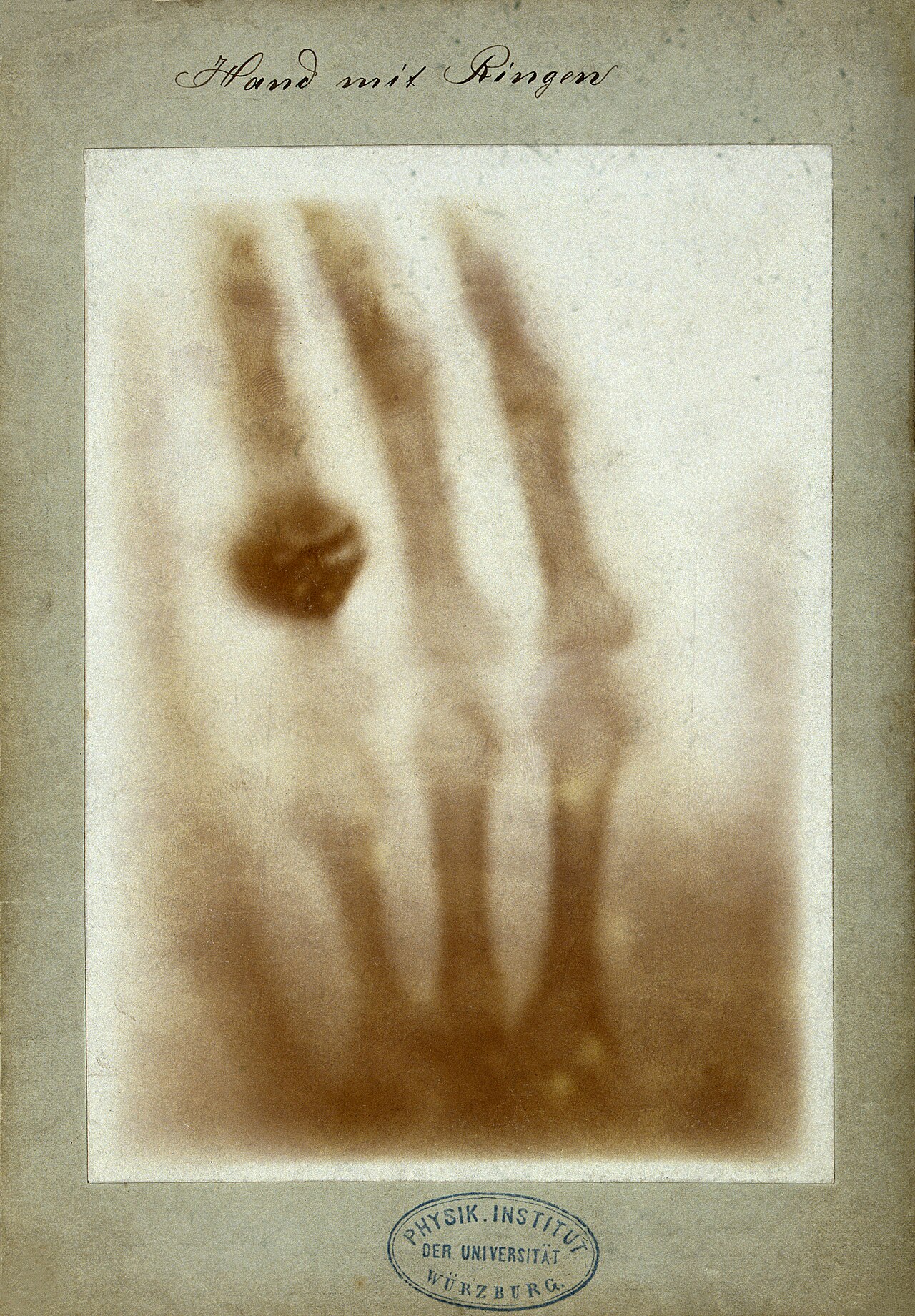
Sunday is World Radiography Day, 131 years since Röntgen found the X-ray. Within 25 years it was standing in shoe stores, so kids could watch their own toe bones wiggle.
In the late afternoon of Friday, November 8, 1895, in a darkened lab in Würzburg, Wilhelm Röntgen noticed a screen across the room glowing every time he ran current through a tube wrapped in black cardboard. He spent the weekend repeating it, then the next six weeks eating and sleeping in the lab. He called them X-rays, X as in unknown. Sunday is the anniversary, which radiographers now mark as World Radiography Day.
Six weeks in, he made a picture of his wife's hand. Anna Bertha saw her own bones with her wedding ring floating around one of them and said, according to the story everyone tells, "I have seen my death." That print, Hand mit Ringen, is the hero image up there. It's a photograph. In 1896 people called the whole thing "the new photography."
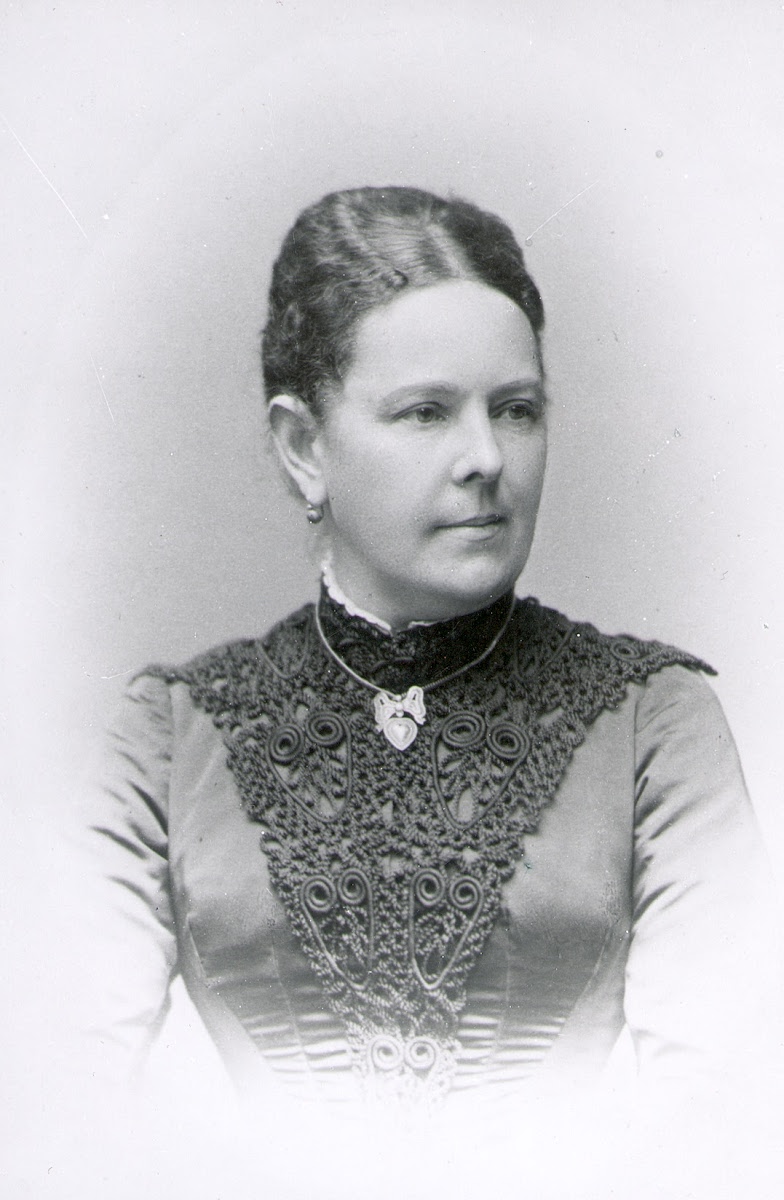
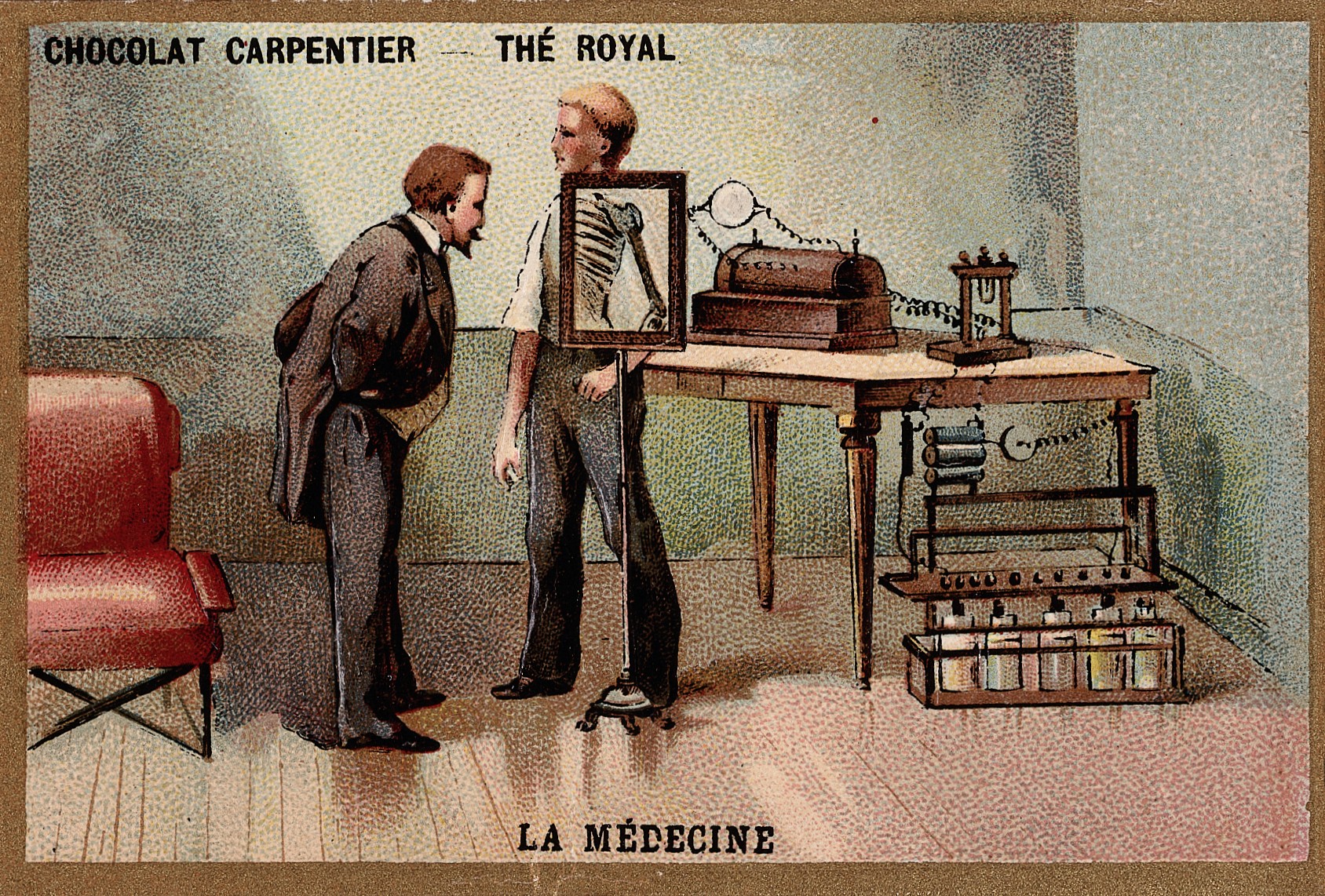
Röntgen refused to patent any of it. Like the Curies, he wanted the whole world to benefit. And it did, fast. By mid-1896 the Quarterly Review complained that X-ray demonstrations were "repeated in every lecture-room" and "caricatured in comic prints." At exhibitions you could volunteer your hand, or your purse. The Pall Mall Gazette found the idea of seeing other people's bones a "revolting indecency" (both quotes via JSTOR Daily). By 1904 Edison's X-ray assistant, Clarence Dally, was dead from the exposure.
None of that stopped the shoe trade. Around 1920 a Dr. Jacob Lowe was demonstrating an X-ray machine at shoe retailers' conventions in Boston and Milwaukee; his patent promised parents they could "visually assure themselves" they weren't buying shoes that would "deform the sensitive bone joints" of their boys and girls. The shoe-fitting fluoroscope was a wooden cabinet built to look like furniture, not medicine. You stood on the step, put your feet in the slot, and three eyepieces on top let the child, the parent and the salesman all watch the toes wiggle inside the new shoe. Historians Jacalyn Duffin and Charles Hayter wrote that it "enticed thrill-seeking children into shops where salesmen could work their magic" (in Isis, 2000, via JSTOR Daily). A British maker's 1937 ad put it plainly: "You press a button and prove you are right."
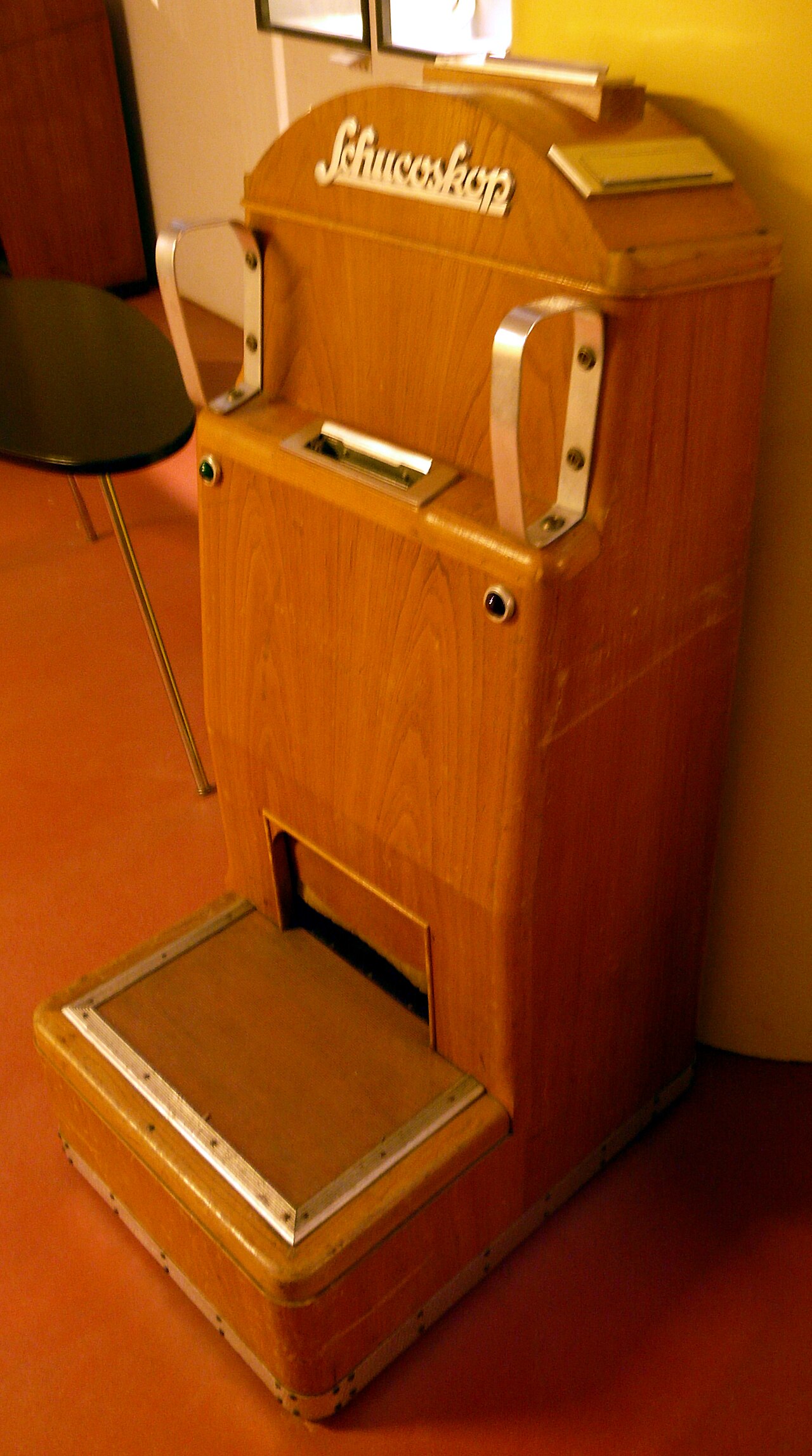
About 10,000 were sold in the US. American machines averaged around 13 roentgens to the feet in a 20-second look, and one tested at 116 (Wikipedia has the survey numbers). Salesmen stood next to them all day. When scientists finally evaluated the machines in 1948, they flagged the radiation and the wiring, and found them no good at fitting shoes. The shoe industry answered in the newspapers that badly fitted shoes were the real danger. Pennsylvania banned them in 1957, 33 states had by 1970, and someone spotted one still working in a Boston store in the late 1970s.
In 1999 Time put shoe-store X-rays on its list of the 100 worst ideas of the century. Röntgen gave the ray away so everyone could have it. Everyone turned out to include the shoe salesman.