Pre-War Prices
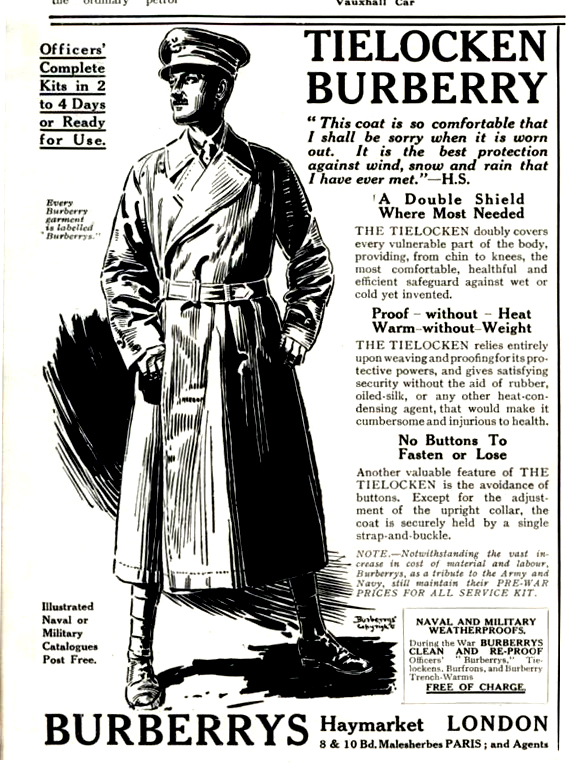
Today is Armistice Day. The trench coat was named in that war, and back then privates weren't allowed to wear one.
Today is Armistice Day. The guns on the Western Front stopped at 11 a.m. on November 11, 1918. In the US it's Veterans Day, and a lot of people will spend it in the coat that war named.
Thomas Burberry was a draper's apprentice who opened his own shop in Basingstoke in 1856. In 1879 he came up with gabardine: the yarn is waterproofed before it's woven, so the cloth keeps rain out and still breathes. Amundsen took it to the South Pole. In 1901 Burberry sent the War Office a design for an officer's raincoat. Aquascutum, over on Regent Street, says it got there first, in the 1850s. Both still claim the coat.
In the First World War it wasn't issued. It was optional, and officers bought their own. On everyone else, Wikipedia is short: "No other ranks were permitted to wear them." The name came from the soldiers in the front line, who called it a trench coat.
Burberry sold it like a catalogue item. The 1916 ad for the Tielocken, its belted model with no buttons, offered "Officers' Complete Kits in 2 to 4 Days," a testimonial ("I shall be sorry when it is worn out") and free cleaning and re-proofing for the duration. And in small italics at the bottom: "Notwithstanding the vast increase in cost of material and labour, Burberrys, as a tribute to the Army and Navy, still maintain their PRE-WAR PRICES FOR ALL SERVICE KIT."
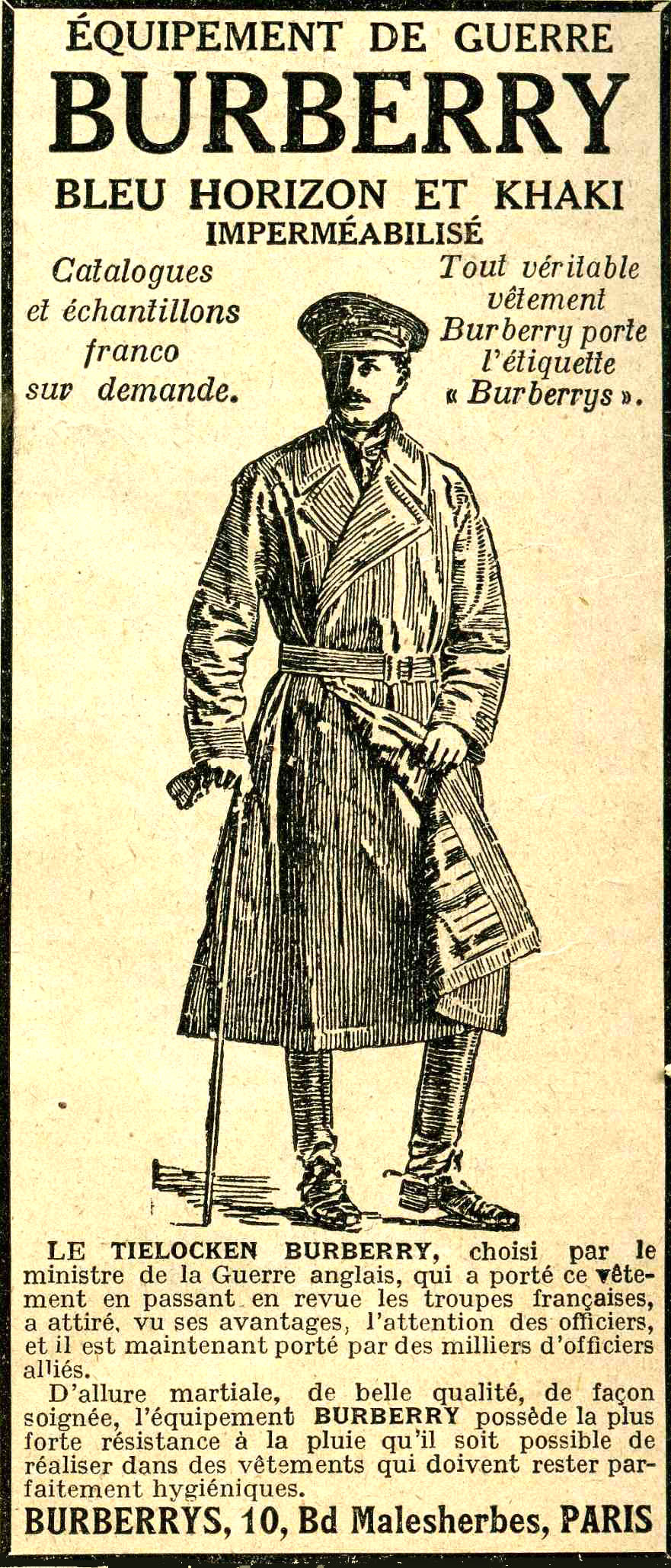
In Paris the ad ran in French, in horizon blue as well as khaki. The British war minister had worn a Tielocken while reviewing French troops, it said, and now it was worn by "des milliers d'officiers alliés," thousands of Allied officers.
Every detail had a job. The shoulder straps held rank insignia. The cuff straps buckled so rain wouldn't run down your sleeve while you held binoculars. The D-rings on the belt were for map cases and swords. The story that they were for hand grenades is a myth.
After the armistice the officers went home and kept the coats, and men and women at home started wearing them too. By the 1920s Burberry was lining it with its check, and in 1942 Bogart wore one in Casablanca.
Burberry still makes it, in gabardine woven at its own mill, check inside. The Long Kensington is $2,850. Other ranks are now permitted.